


Plan pitting heads, filling upgrades, conveyors and pasteurisation capacity around the factory growth programme.
Plan expansion before the first installation
The supplied olive-line brief treats expandability as a central engineering principle. A modular arrangement allows capacity and automation to increase gradually with market growth. Define the likely product range and output stages early. Space, utility routes and handling interfaces are easier to provide during the original layout than after the production hall is fully occupied.
Find the actual bottleneck
Review receiving, grading, destemming, pitting, washing, filling, liquid dosing, closing, thermal processing and packing. The constraint can change with olive size, product presentation and container. Include cleaning, setup and operator-assisted duties in the assessment. A faster filler cannot increase finished output if pitting or pasteurisation remains the limiting stage.
Select coordinated equipment changes
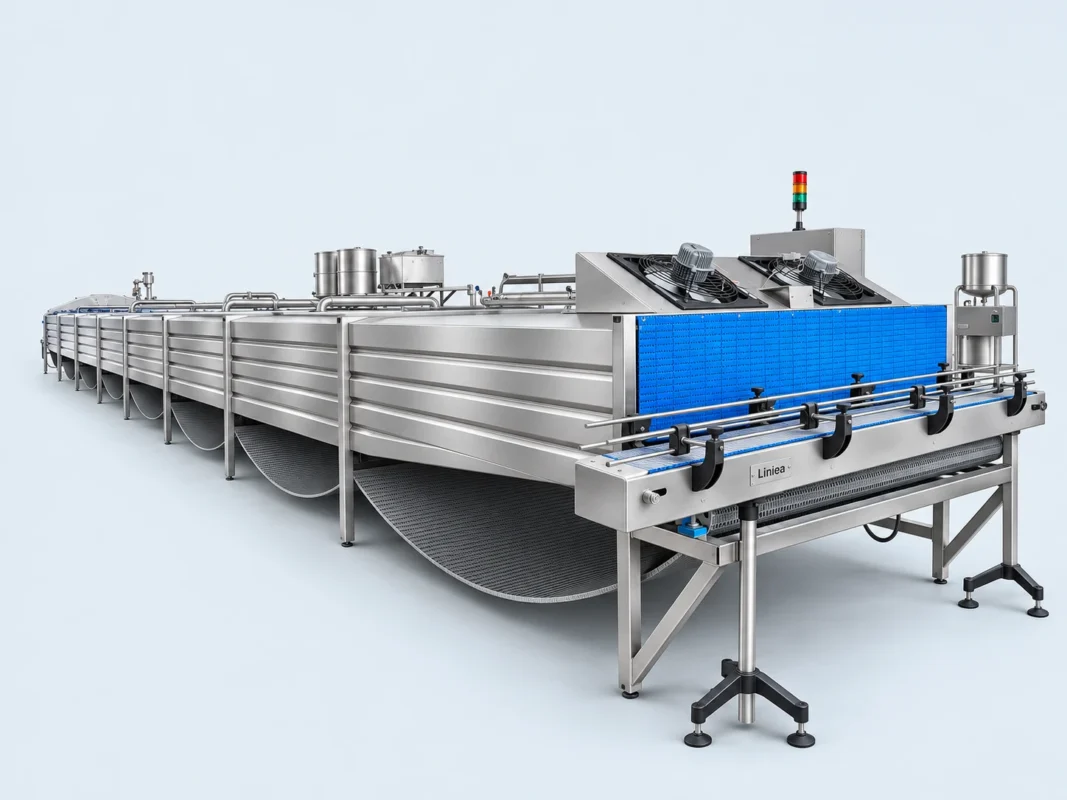
The source identifies extra pitting heads, filler upgrades, faster conveyors and an additional pasteurising tunnel as development options. Each change needs an interface review. Confirm whether upstream supply, container feeding, closure handling and final packing can support the new rate. Check utility connections and handling space before ordering equipment.
Commission each growth stage deliberately
Stage installation, operational testing and operator training around the production programme. Document the revised settings and responsibilities. Gradual investment can reduce the risk of a single major expansion, but downtime and process changes still need a realistic plan. Liniea can coordinate the equipment changes with the site and the required product performance.
Explore the Liniea table olive production line or discuss your factory requirements.
