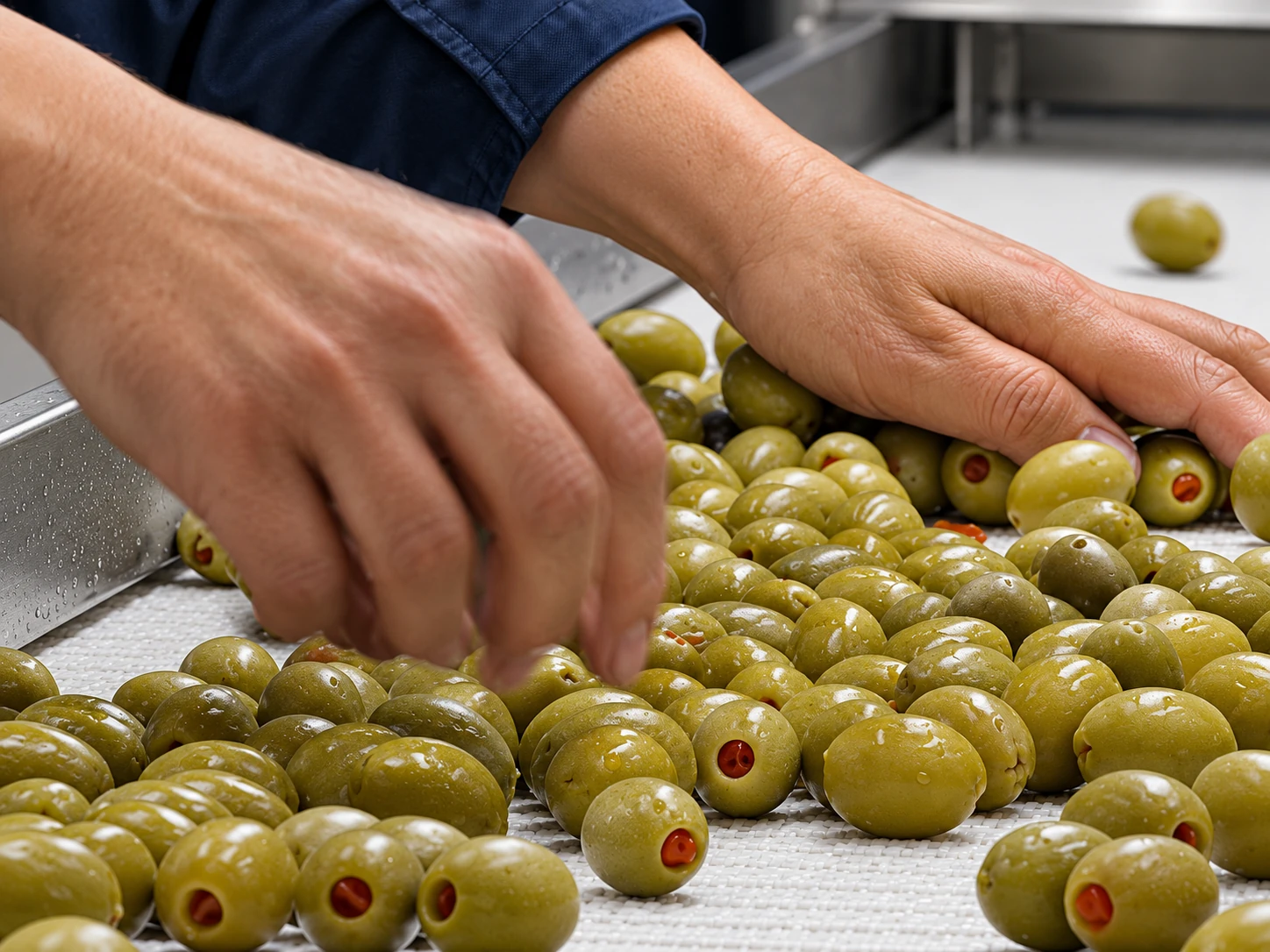
Table olive canning and packaging conveyor

Home › Production Lines › Table Olive Processing & Packaging Line

TABLE OLIVEPRODUCTION LINE

Prepare and package table olives through washing, grading, optional pitting, product filling, brine preparation, dosing and closing.

Configure your line Request an estimate

HIGH PERFORMANCE

RELIABLE DESIGN

PROCESS CONTROL

EASY TO MAINTAIN

COMPLETE TABLE OLIVES PRODUCTION PROCESS

1

Olive receiving

2

Washing

3

Grading & destemming

4

Optional pitting

5

Olive filling

6

Brine dosing

7

Closing

8

Thermal treatment

9

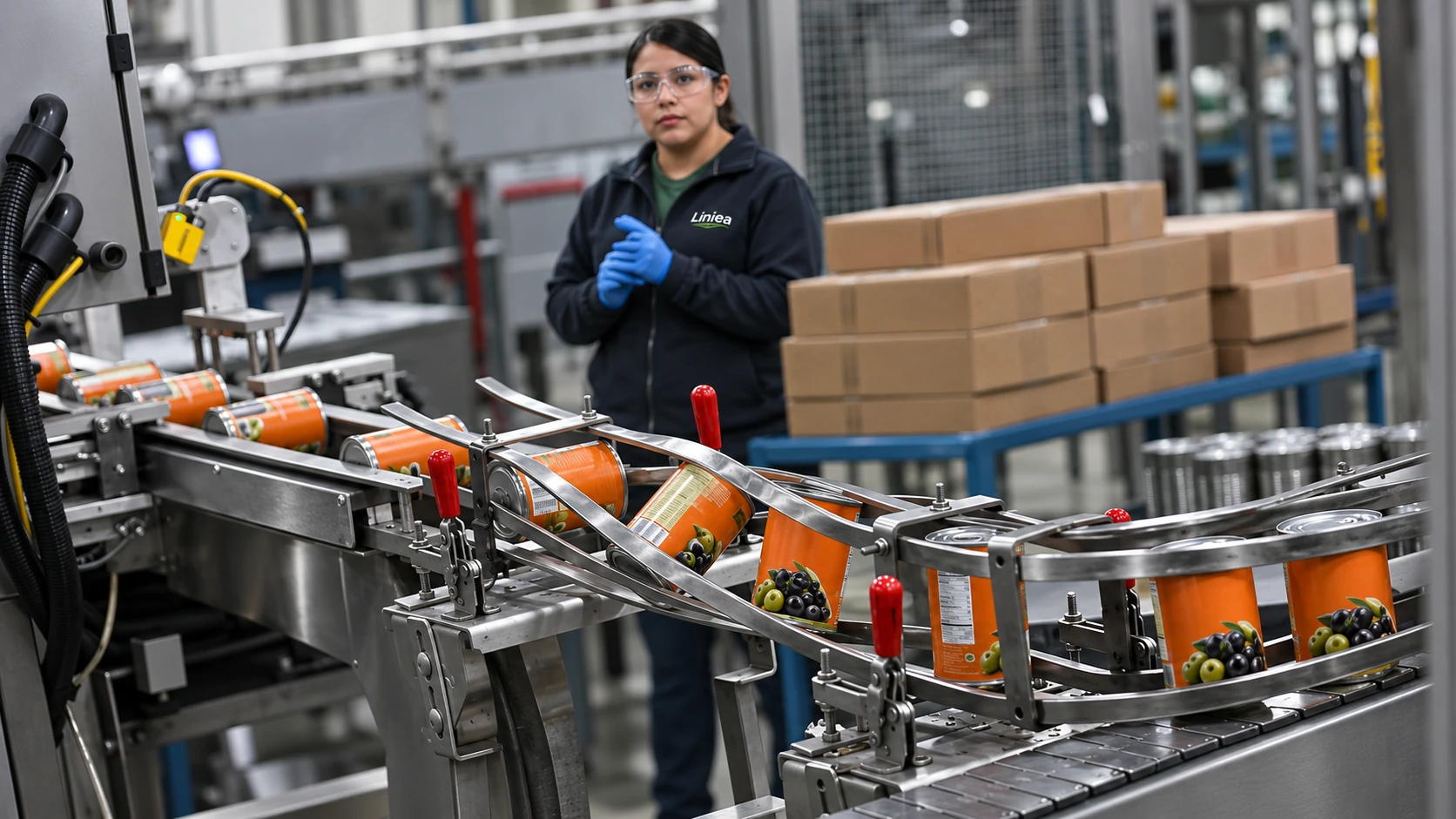
Cooling & packing

Table Olive Processing Plant

Designed and manufactured by Liniea Industrial Group

The table olive production line designed by Liniea Industrial Group is an integrated industrial system for processing, preparing and packaging green, black, brined, sliced, pitted and seasoned olives. Each installation is engineered around the target capacity, product type, packaging and required level of automation. Hygienic requirements and process-control parameters are incorporated into the design to support stable, consistent production at industrial scale.

The line processes different olive varieties and can produce products in brine, oil or flavoured mixtures, including pickled products, salted vegetables and pickled cucumbers with the appropriate preparation equipment. The process can be adjusted for different sizes of glass jars or metal cans without fundamentally changing the line structure.

The machinery covers unloading, size grading, destemming and pitting, washing, filling, closing, pasteurisation, cooling, quality control and cartoning. Together, these stages form the principal production infrastructure for table olives and related products.

  • Green, black, whole, pitted, sliced and seasoned olives
  • Brine, oil and flavoured covering liquids
  • Glass jars, metal cans and appropriate PET configurations
  • Modular expansion and automation upgrades
Request line catalogue

TECHNICAL SPECIFICATIONS

Available capacity 5–25 tonnes of olives/day
Factory infrastructure requirements Electricity, water, and gas or diesel fuel
Required workforce 3–8 people, depending on automation
Production line space requirement 650–1,000 m²
National standards listed in the supplied brief 116, 7940, 9442, 9446, 9445
Equipment warranty 18 months
After-sales service 10 years
Get a custom solution

KEY FEATURES

  • Integrated receiving, grading, destemming and pitting
  • Washing and preparation matched to olive variety and product
  • Volumetric olive filling and coordinated covering-liquid dosing
  • Closing, pasteurisation, cooling and final quality control
  • Glass, metal-can and product-specific PET packaging configurations
  • Cartoning and end-of-line packaging
  • Modular capacity and automation development

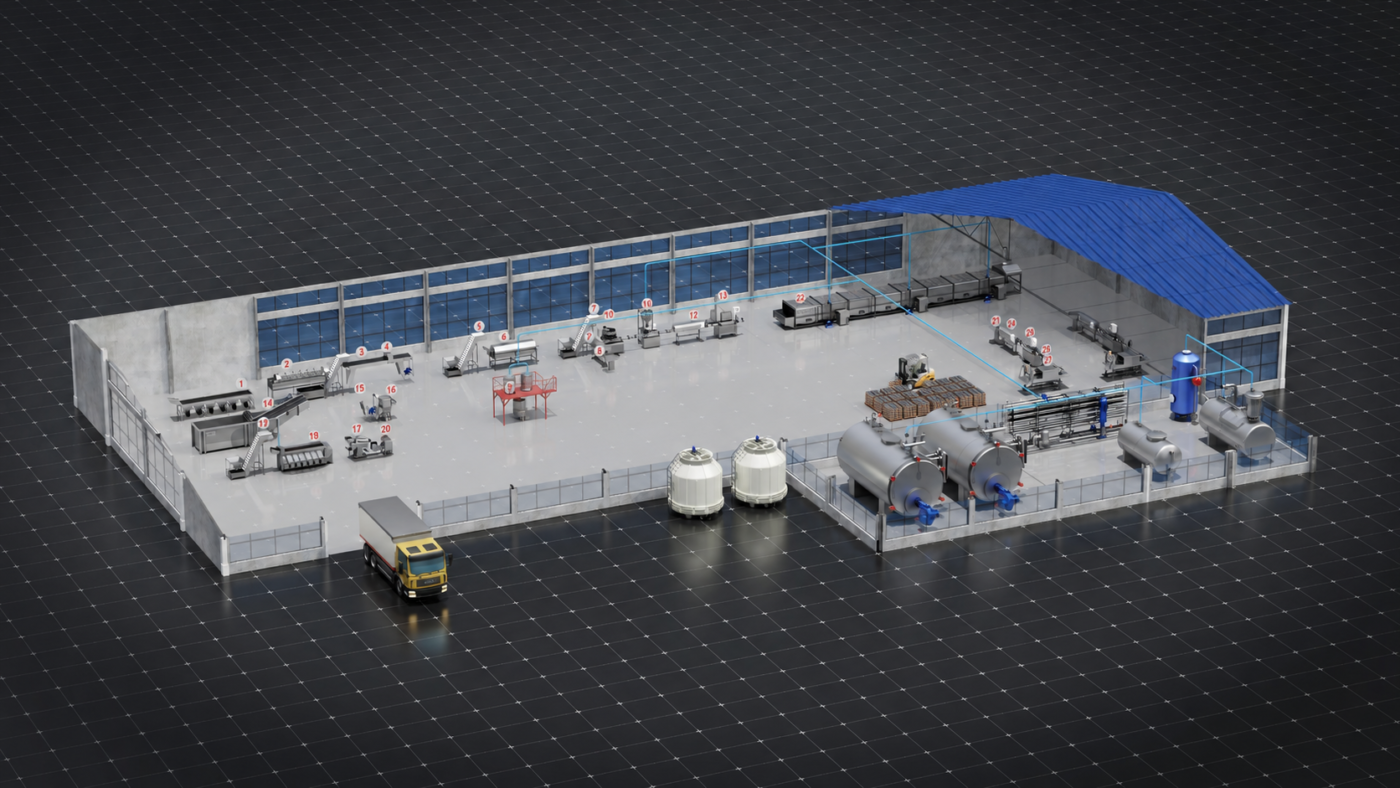
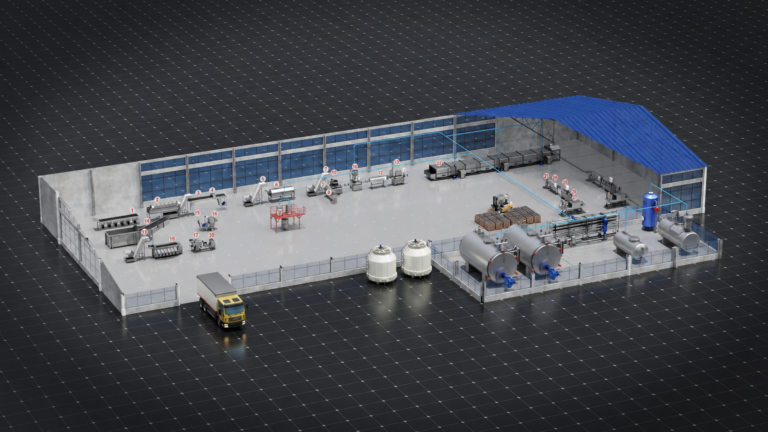
Layout design

Table olive production line machinery

  1. Olive size grader
  2. Olive destemmer
  3. Olive pitter
  4. Cooking kettle
  5. Olive filler
  6. Pneumatic brine doser
  7. Jar capper
  8. Pasteurising tunnel
  9. Sleeve applicator

Table olive production line layout supplied with the project materials.

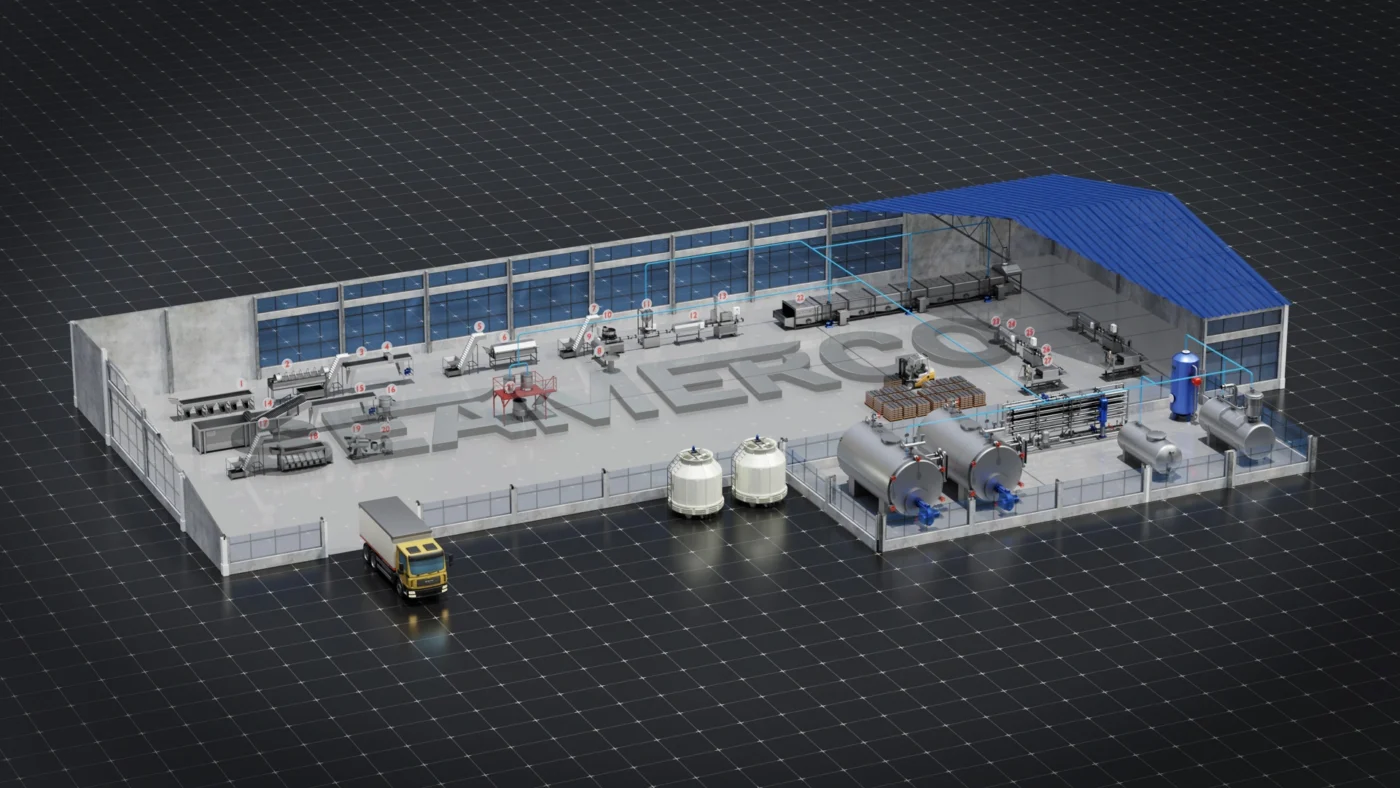
Layout design

Table olive production line machinery

Supplied layout for the table olive processing and packaging line

Table olive production line layout supplied with the project materials.

  1. Olive size grader
  2. Olive destemmer
  3. Olive pitter
  4. Cooking kettle
  5. Olive filler
  1. Pneumatic brine doser
  2. Jar capper
  3. Pasteurising tunnel
  4. Sleeve applicator

MAIN MACHINES INCLUDED

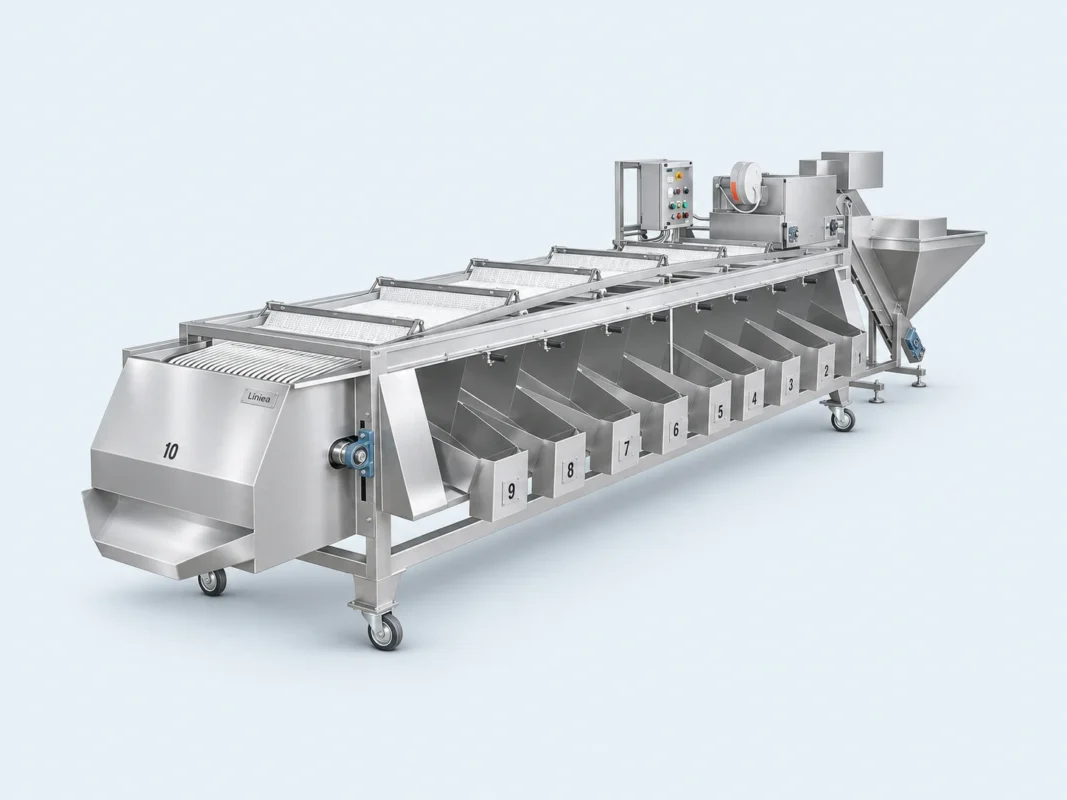
Complete olive size grading machine OPS1550

Olive Size Grading Machine

Separating olives according to size.

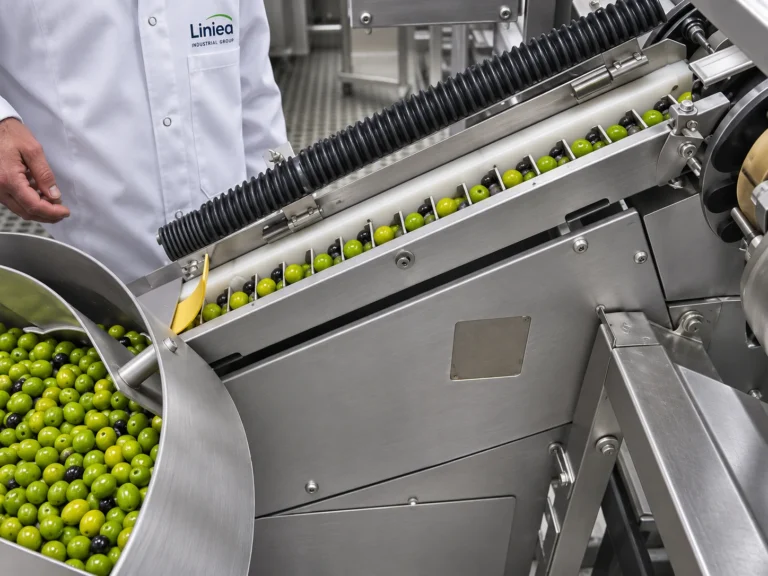
Parallel rubber belts gradually move farther apart, allowing olives of different sizes to separate into grades. These machines normally provide four or six size grades.

OPS1550

The illustrated grader uses multiple outlets to separate olives by size.

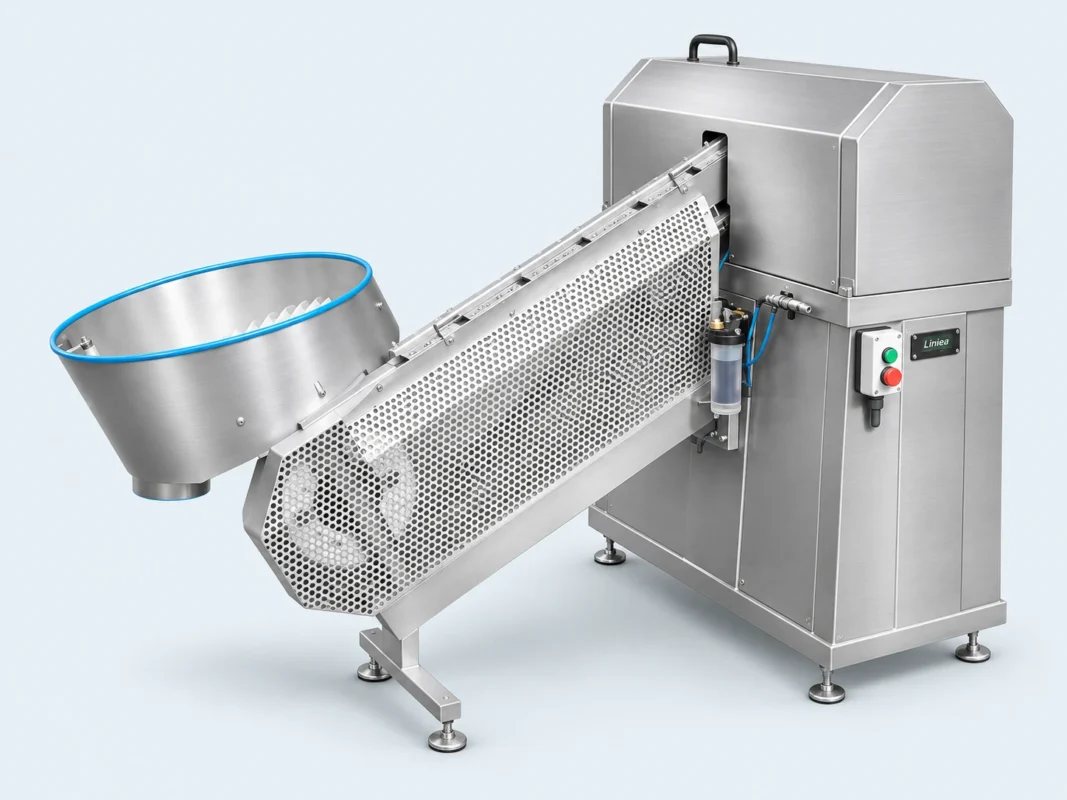
Olive Destemmer

Removing the olive stem from the fruit.

Rubber-coated steel rollers rotate in opposite directions and turn the olives. When a stem passes between the rollers, it is pulled inward and separated from the fruit.

OPS1552

Complete olive pitting machine OPS1551

Olive Pitting Machine

Separating the olive stone from the flesh.

Olives are first sorted and positioned individually in rotating holders. Reciprocating horizontal punches enter the flesh, separate the stones and eject them from the machine.

OPS1551 · 300 kg/hour

Complete rotary olive filling machine FM3110

Rotary Olive Filler

Volumetrically filling olives into different types of containers.

Olives are held in a vertical rotating drum. Each rotation releases them in a cascading flow onto a conveyor carrying PET containers, glass jars or metal cans. Excess olives are removed by vibration or manually.

FM3110 · 5,000–6,000 jars/hour

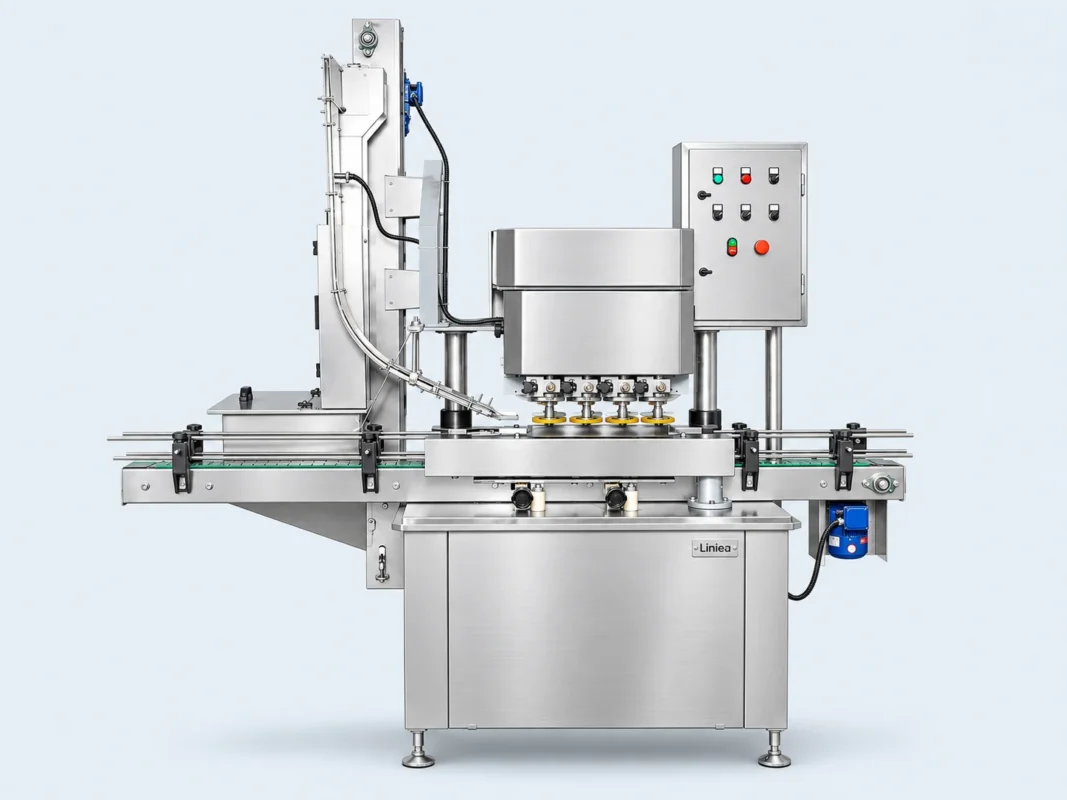
Complete eight-head jar capper CMS4106

Eight-Head Jar Capper

Applying metal or PET screw caps to glass or PET containers.

The eight-head jar capper applies controlled torque to close screw caps in four stages. The first two heads apply reverse rotation to engage the thread, while the remaining six progressively tighten the closure. Automatic cap feeding is a key feature.

CMS4106 · 4,000–6,000 jars/hour

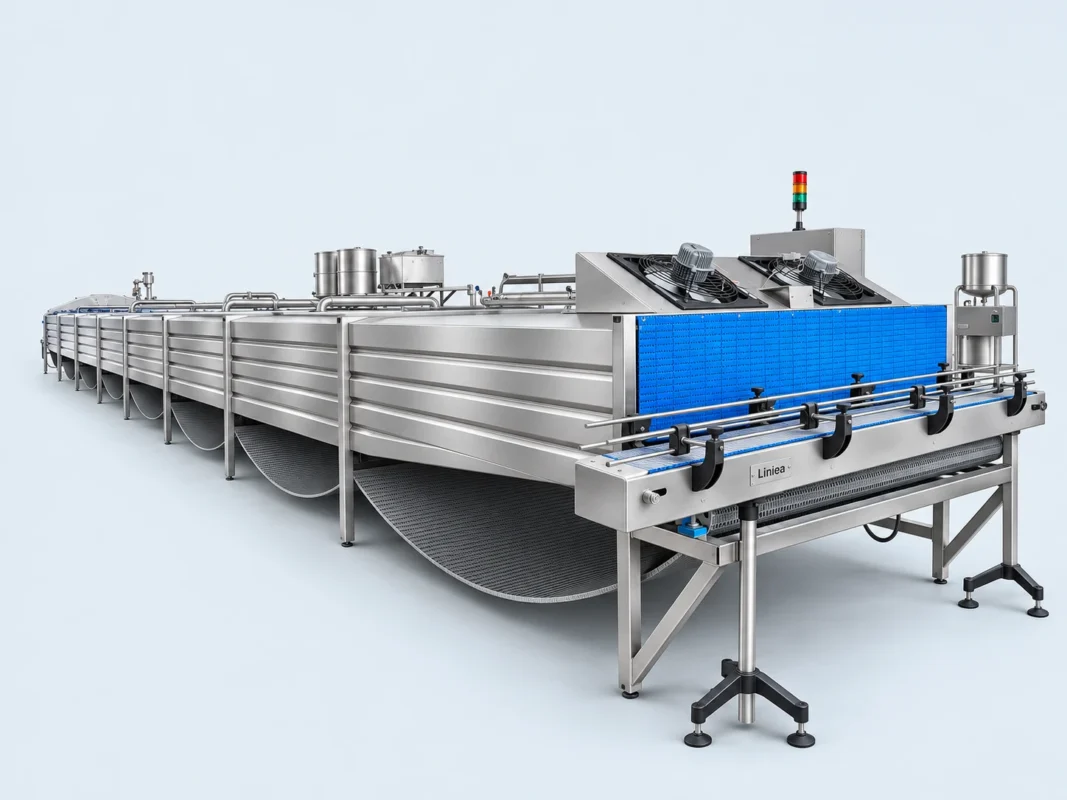
Complete pasteurising tunnel GM3246

Pasteurising Tunnel

Pasteurising the product after it has been packed and sealed in its container.

The tunnel applies controlled, uniform heat through three thermal phases after closing. This stage supports the shelf life, microbiological safety and final quality of table olives. The treatment must be specified for the actual product and container.

GM3246

Complete food container exhaust tunnel

Exhaust Tunnel

Removes air from filled containers before closing.

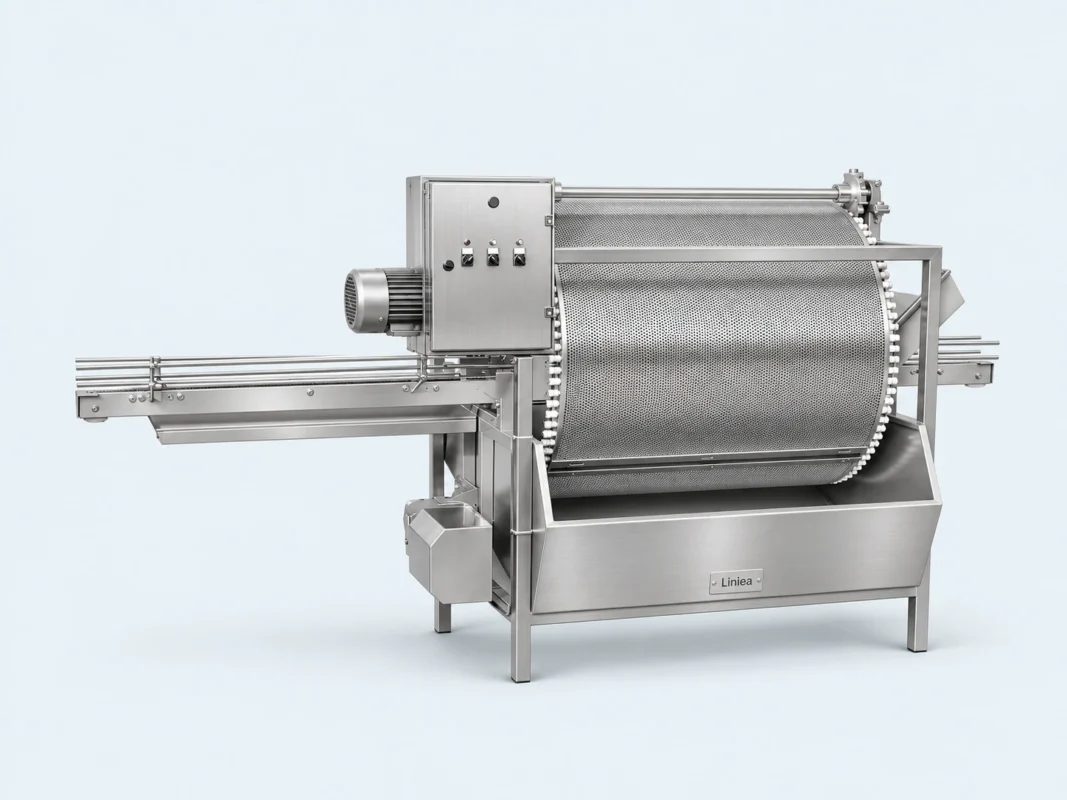
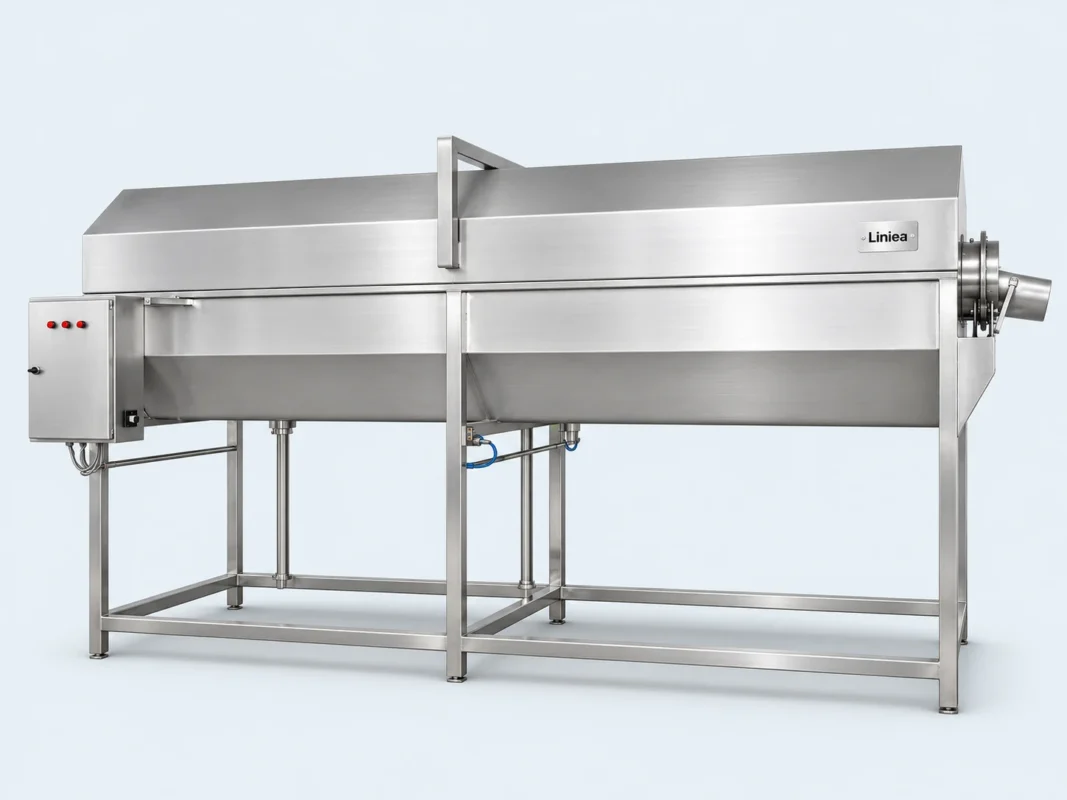
Complete stainless steel blancher

Blancher

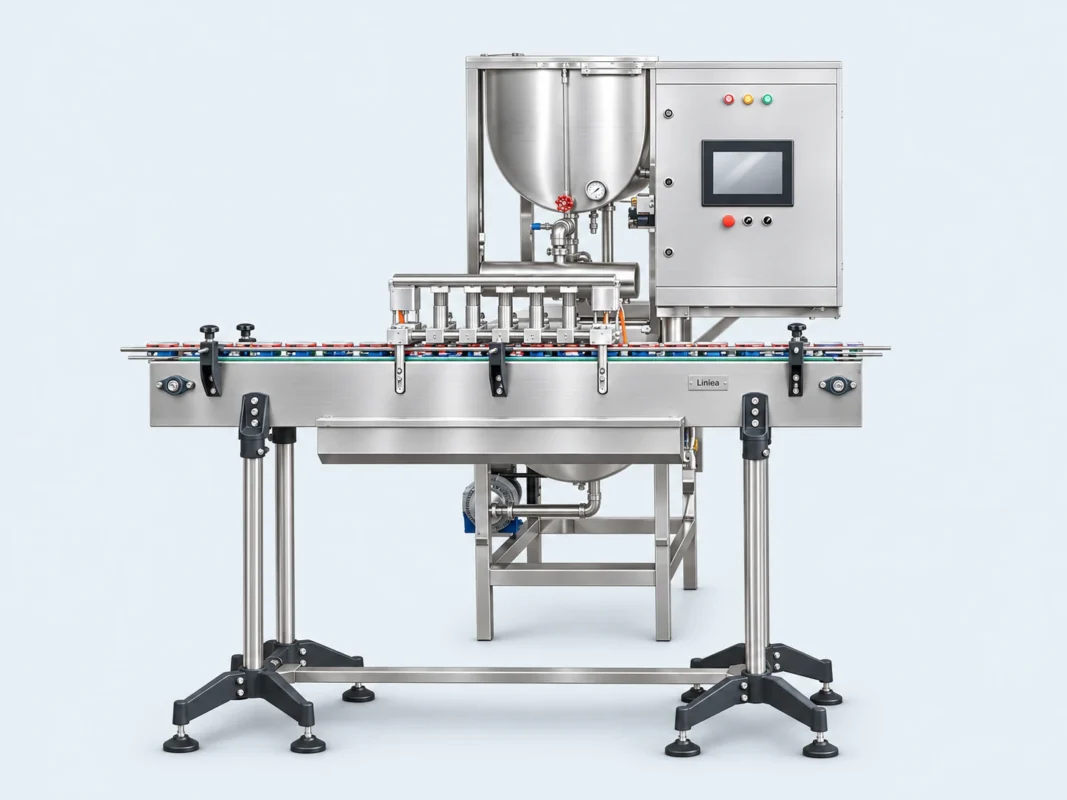
Complete pneumatic covering-liquid and brine doser

Pneumatic Brine Doser

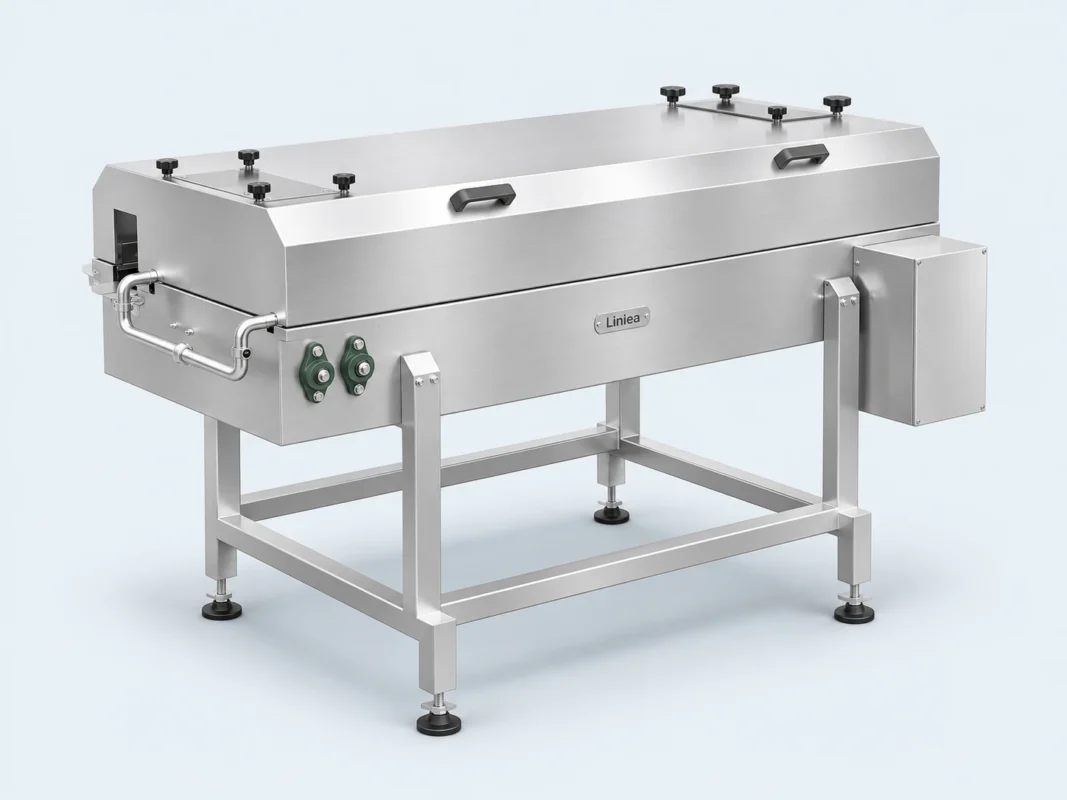
Six main machines are specified in the supplied text. Three auxiliary machines follow the supplied image folders; photo-only items have no detail-page link.

Explore Liniea projects

View projects

ENGINEERED FOR YOUR PROCESS

How Liniea builds your table olive machinery

Liniea Industrial Group manufactures table olive and other canned-food production lines. Its complete service includes designing and manufacturing the olive packaging line, supplying auxiliary equipment, installation and commissioning, operational testing, operator training and line-performance optimisation tailored to each facility, with provision for future expansion.

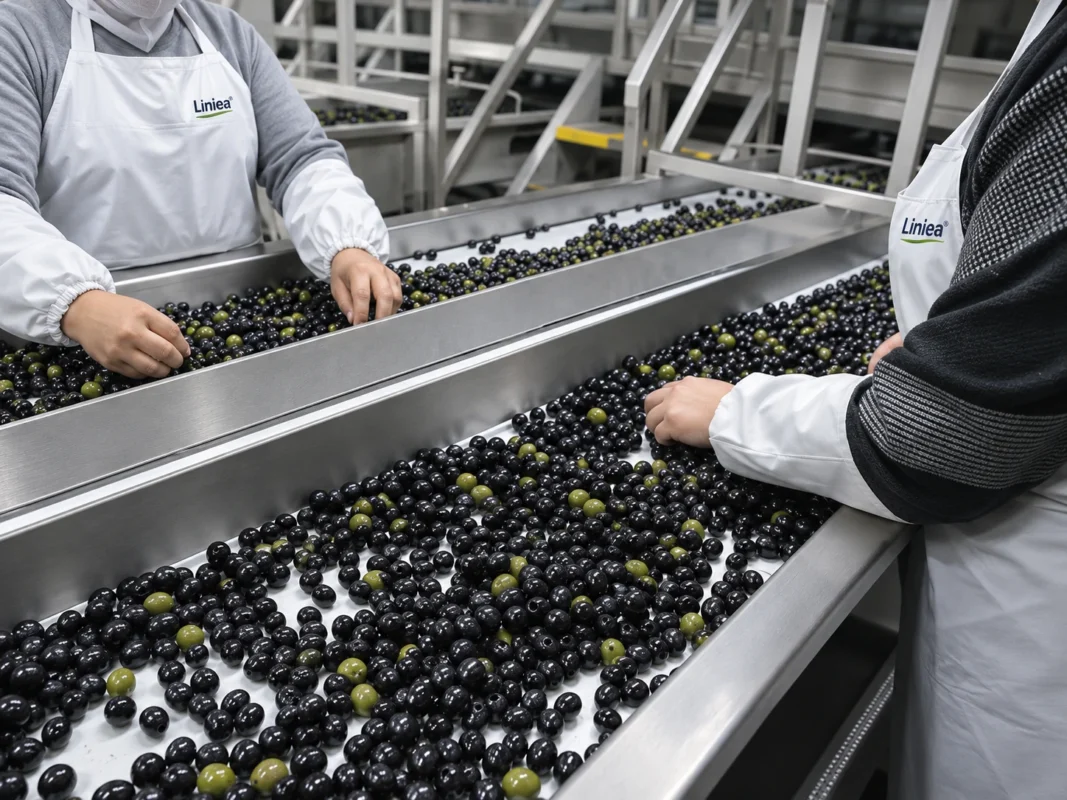
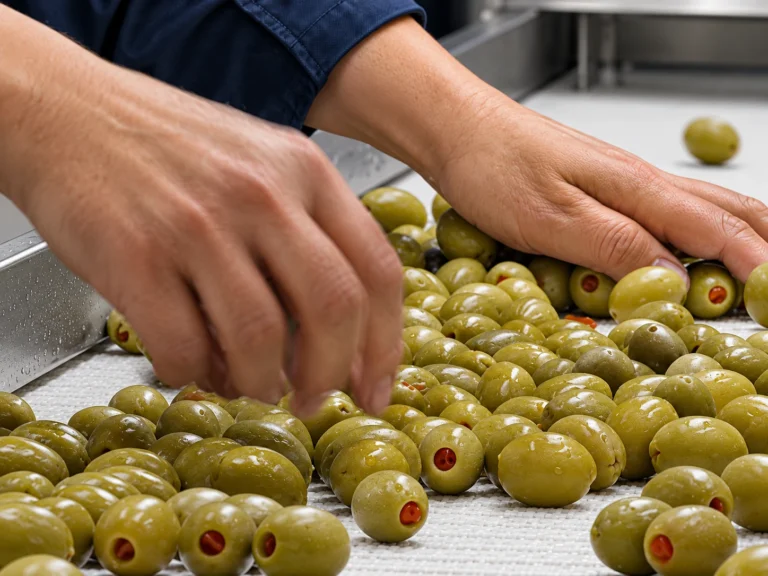
Operators inspecting black olives on stainless steel conveyors

From process requirements to a coordinated equipment package.

01

Process specification

Define the target capacity, product range, packaging format and level of automation, including olive variety, size grades, whole or pitted formats, covering liquid, container size and thermal-processing requirements.

02

Equipment engineering

Coordinate receiving, grading, destemming, pitting, washing, olive and brine filling, closing, pasteurisation, cooling, quality control and cartoning as one integrated system.

03

Fabrication & assembly

Manufacture the machinery to suit the agreed production process and factory infrastructure.

04

Trial production & optimisation

Support trial production and optimise the performance of the complete production line.

How Liniea helps set up your table olive factory

One coordinated route from site planning to commissioning.

Feasibility

Define daily output, the product portfolio, investment budget, packaging and automation level.

Factory layout

Plan unloading and receiving, preparation and processing, packaging, empty-container storage, finished-product storage and a quarantine area. Allow for olive residence times and future expansion.

Utilities

Plan hygienic and industrial water, three-phase electricity, gas or steam, saline-wastewater collection and treatment, process piping and associated installations.

Installation

Coordinate installation and commissioning of the production line and its auxiliary equipment.

Commissioning

Carry out operational tests, train operators and optimise the performance of the complete line.

The project scope is tailored to your site, product and production requirements.

Table olive line: your questions answered

What determines the cost of setting up a table olive production line?

Investment depends on daily production capacity, whether the olives are whole or pitted, and the required level of automation. Glass jars, metal cans and PET containers each require appropriate machinery and handling equipment.

Auxiliary systems, including multistage washing, the pasteurising tunnel, water- and energy-use control and provision for future expansion, also influence the investment estimate.

Factory space is determined by capacity, the time olives spend in processing stages and the automation level. The facility includes an unloading and receiving area, preparation and processing halls, a packaging hall, empty-container storage, finished-product storage and a quarantine area.

The main infrastructure comprises hygienic and industrial water, three-phase electricity, gas or steam, drainage and treatment for saline wastewater, process piping and associated installations.

Shared washing, filling and packaging equipment can be configured for flavoured, sliced, cracked, stuffed and seasoned olives, including Persian-style seasoned olives. With limited additional preparation equipment, the line can also produce pickled olives, olive-and-vegetable mixtures and selected salted or pickled vegetables.

Product diversity can be achieved through formulation changes and process adjustments without fundamentally changing the line structure.

The main difference is the amount of operator involvement in pitting, filling and packaging. In a fully automatic configuration, olive transfer, pitting, even distribution into containers, addition of the covering liquid and closing operate continuously under controlled conditions.

In a semi-automatic line, some operations, such as machine feeding or arranging containers, are performed manually. This provides flexibility but places greater reliance on operators.

Expandability is a central engineering principle in the design of the table olive line. Capacity can be increased by adding pitting heads, upgrading the filler, increasing conveyor speed or adding a pasteurising tunnel.

The modular machinery structure allows the investor to increase capacity and automation gradually in response to market growth, reducing the risks associated with a single large expansion.

€

How much does a table olive production line cost?

Daily capacity, whole or pitted olives, packaging format, automation, multistage washing, pasteurisation, water and energy control and future expansion determine the investment.

Liniea focuses on equipment selection that suits the project and allows future expansion; a project-specific quotation follows engineering review.

EquipmentInstallationUtilities
Discuss your project budget

Table olive production insights

Table Olive Factory Space and Infrastructure

Plan receiving, processing, packaging, storage, quarantine and saline-wastewater management as one factory.

Read article
What Other Products Can a Table Olive Line Make?

Explore whole, pitted, sliced, cracked, stuffed and seasoned olives with product-specific preparation and packaging.

Read article
Semi-Automatic vs Fully Automatic Olive Production Lines

Compare operator involvement in pitting, filling, covering-liquid dosing and closing before choosing automation.

Read article
Explore all 12 planning guides

READY TO START YOUR PRODUCTION PROJECT?

Discuss your product, capacity and factory requirements with Liniea.