


Balance raw olive input, pitting, container filling, closing and thermal treatment around saleable output.
Start with the production programme
The supplied Liniea line range is 5–25 tonnes of olives per day. Define the intended varieties, whole or pitted formats, container sizes, daily operating hours and expected sales. State whether an output figure refers to incoming olives, prepared fruit or finished packaged product. These are different measures and should not be used interchangeably.
Read machine ratings in their proper context
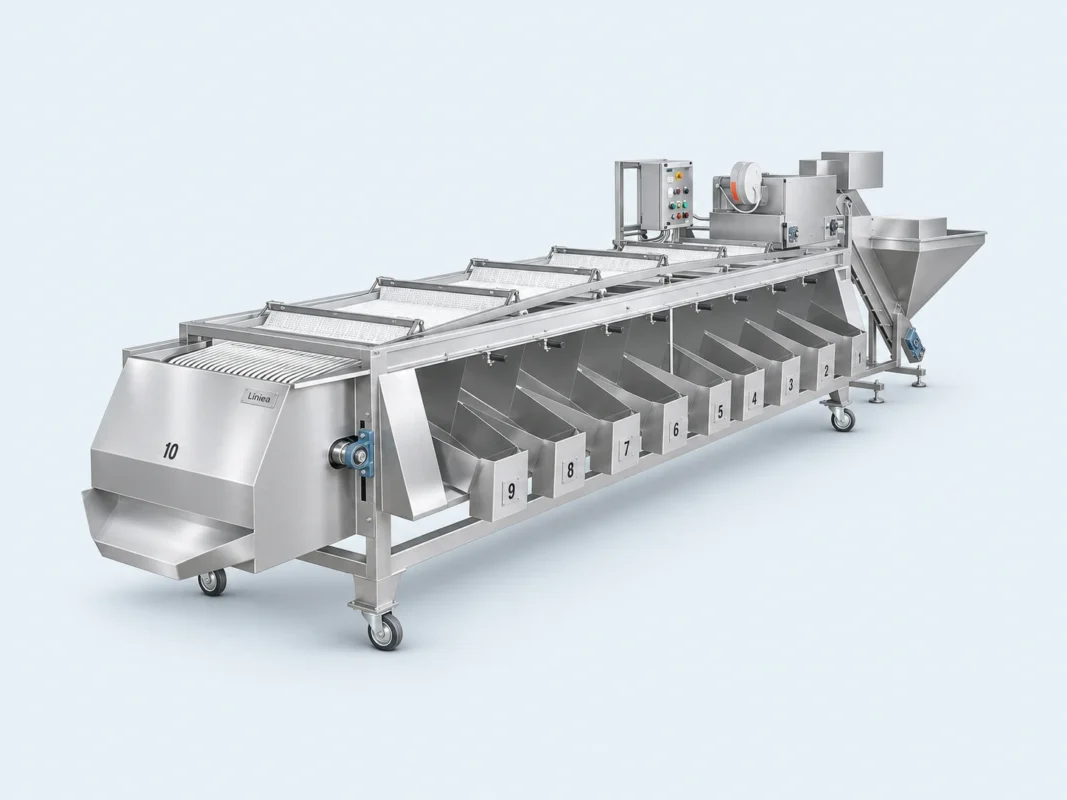
The olive grader is listed at 2–7 tonnes and the destemmer at 3–7 tonnes, without a time basis. The pitter is specified at 300 kg/hour. Confirm the missing time units and the number of parallel machines before balancing the line. The highest number in a machinery list does not establish the capacity of the complete installation.
Coordinate solids and packaging output
The rotary olive filler is specified at 5,000–6,000 jars/hour and the eight-head capper at 4,000–6,000 jars/hour. Relating these speeds to tonnes/day requires the actual olive fill weight and operating schedule. The pasteurising-tunnel capacity is blank in the source. Obtain its project-specific capacity before treating the packaging arrangement as balanced.
Allow for realistic operating time
Include cleaning, changeovers, inspection, product handling and planned maintenance. Confirm the product mix and which operations can run continuously. Modular development can add capacity when demand grows, but the first installation must still meet an agreed operating programme. Liniea can coordinate the machinery around verified product and site requirements.
Explore the Liniea table olive production line or discuss your factory requirements.
