


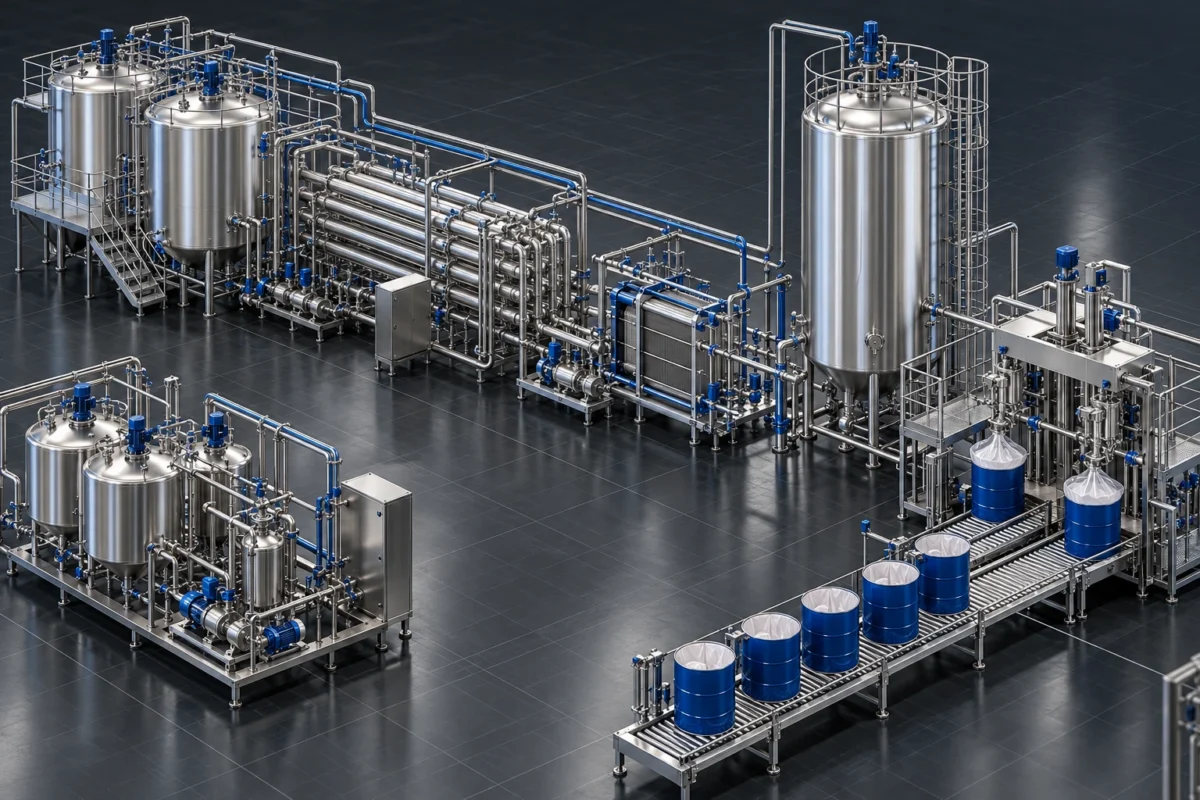
Define the paste supplied to the system, the bulk bag specification and the intended production schedule. The treatment, transfer, buffering and filling sections must be evaluated as one process. Factory planning also needs space for clean packaging handling, drum movement and service access.
Define the production brief
Begin with processed paste supply and product characteristics. Record bulk bag format, drum handling and aseptic filling duty. Give the engineering team a clear first-phase product range and separate it from possible later expansion. A realistic brief identifies operating shifts, planned changeovers and how incoming material will be stored.
Plan the whole factory
The scope should connect paste treatment, controlled transfer and bag-in-drum filling. Allow for storage, maintenance access, personnel movement and finished-product dispatch. A floor plan should show service access as well as equipment footprints; clearances and material flow need review before civil work is committed.
Check utilities and project boundaries
Review treatment-system services, sterile-process requirements, cooling and cleaning utilities against the proposed equipment list. Identify who supplies building work, service distribution, installation and commissioning. Separate the equipment price from site preparation, freight and operating inputs when comparing proposals.
Prepare information for a quotation
Share a site drawing, intended production schedule, representative product details and compatible aseptic bags supported by drums. Ask for a documented scope and assumptions, then review the coordinated treatment, buffer and filling capacity before confirming the line configuration.
Discuss your production plan
Liniea can review the intended product, site and equipment scope with your team.
Explore the Tomato Paste Aseptic Packaging production line · Discuss your project
