


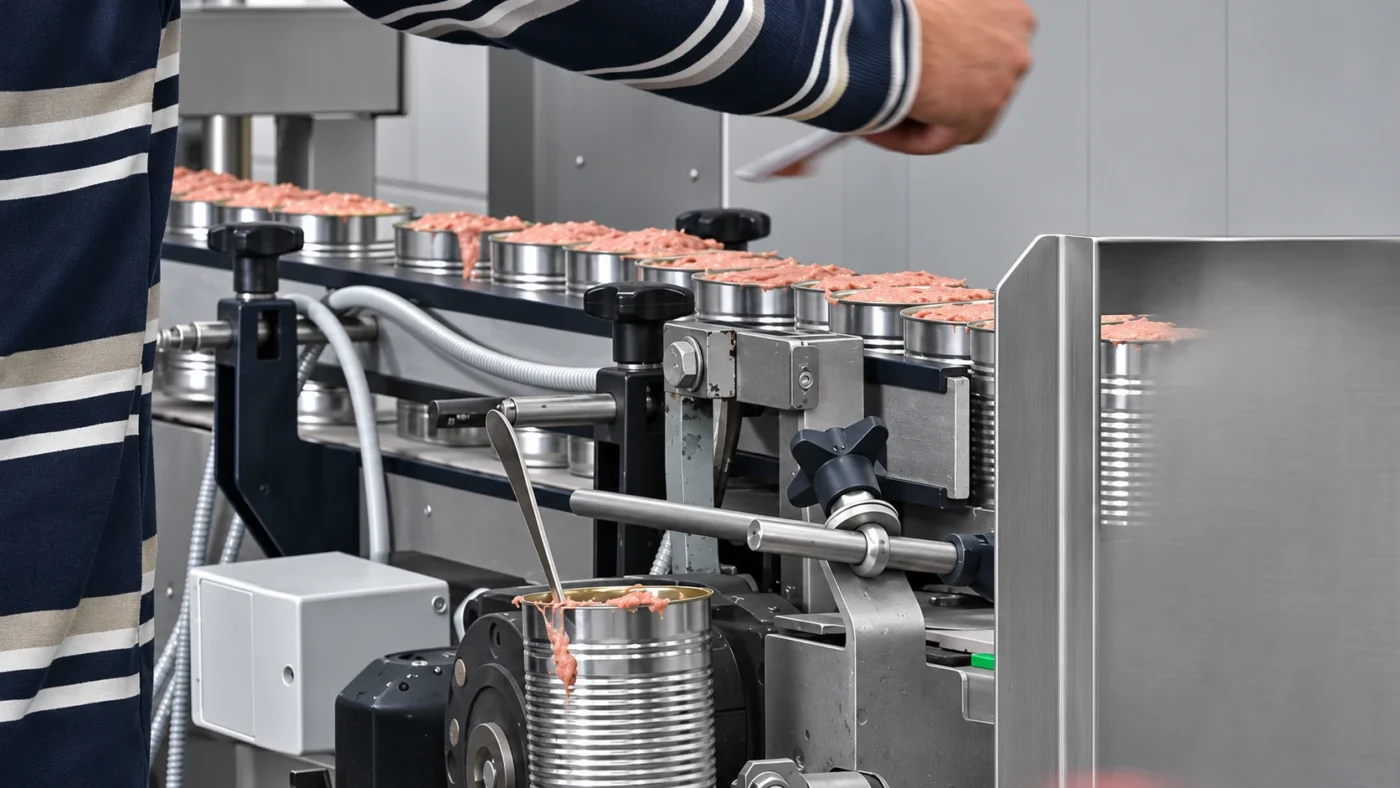
Balance recipe preparation, filling, can seaming and retort handling around the required saleable output.
Start with daily saleable output
The supplied Liniea line range is 5,000–20,000 cans of 400 g per day. Define the product portfolio, fill weight, operating hours and realistic sales plan before selecting a configuration. Daily can output is not interchangeable with a standalone machine’s maximum speed. Include time for cleaning, changeovers, setup and planned checks.
Relate the recipe to equipment duties
Pâté, chunks in sauce and jelly-based products can have different preparation, mixing and filling needs. Ingredient format and required particle size influence the upstream process. Define whether capacity refers to raw materials, prepared mixture or packaged product. The cooker specification of 900–1,400 kg does not state a time basis, so this needs confirmation before balancing the line.
Coordinate filling and retort processing
The source gives the two-piston filler at 50–60 containers/minute, the rotary filler at 100–120 containers/minute and the seamer at 100–160 cans/minute. These figures describe different machines and configurations. The retort entry is expressed as jars/hour although the application describes metal cans; confirm the container and operating basis rather than treating the values as directly comparable.
Provide controlled room for growth
Review batch size, retort loading, storage, labour and utilities against the complete operating programme. Too little capacity can restrict production campaigns, while excess capacity can tie up investment. Parallel mixers, upgraded filling or extra retorts may offer a staged route. Liniea can coordinate the equipment package around confirmed product and production requirements instead of selecting machines by their highest individual rating.
Explore the Liniea canned pet food production line or discuss your factory requirements.
