


Retail containers and bulk bags serve different customers and distribution routes. Cans or jars require filling, closure and the appropriate finishing equipment. Aseptic bags require a compatible treatment, sterile transfer and filling system. Decide the intended market before fixing the plant layout.
Specify the operating requirement
Define target paste concentration and downstream packaging and describe retail cans, glass jars or aseptic bulk bags. Include the available working hours, expected changes between products and how materials reach the packing area. These details make the discussion more useful than a daily production target alone.
Review interfaces between stages
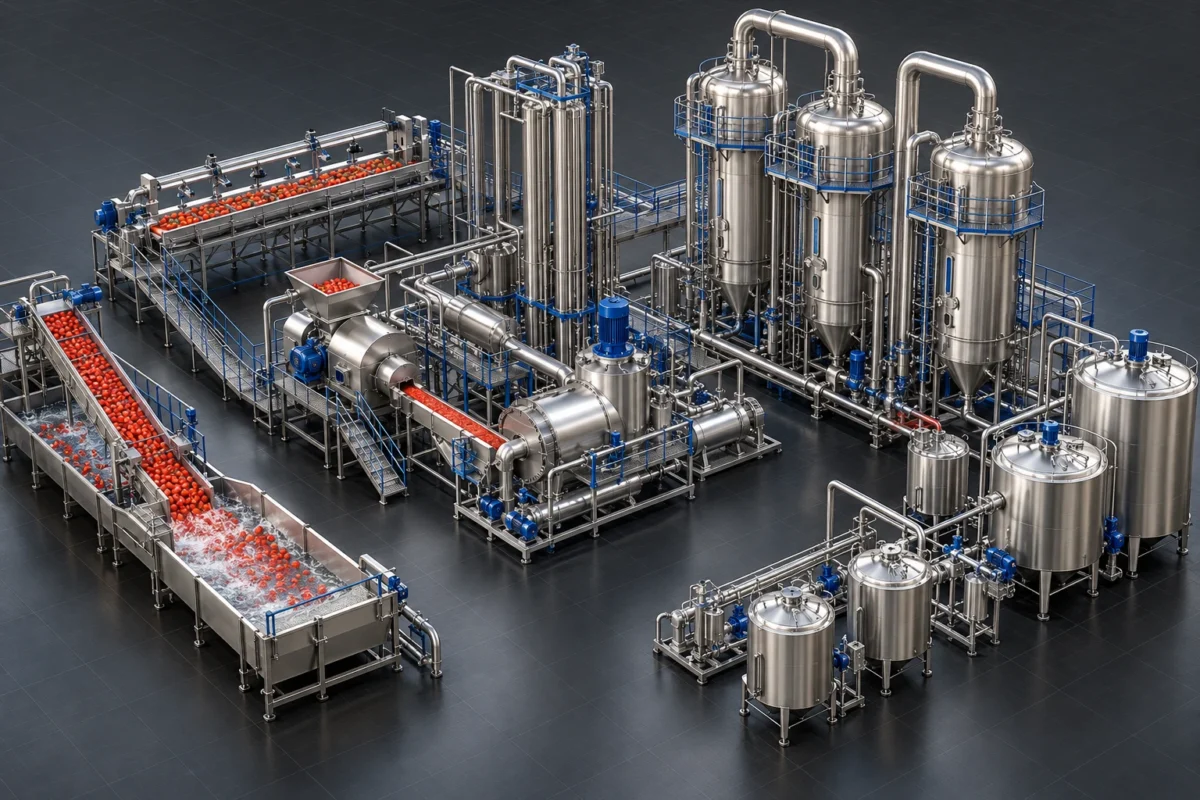
Map raw tomato receiving, juice extraction and concentration and identify where material waits between operations. Consider evaporation capacity and the seasonal receiving window, transfer arrangements and operator access. Review how stoppages and batch changes affect the equipment before and after the selected stage.
Include utilities and cleaning
The service review should cover steam demand, cooling water, electrical supply and cleaning water. Discuss product-contact cleaning, access for inspection and the procedure for changing between recipes or pack sizes. Final operating and product-processing parameters must be established for the agreed application.
Turn the review into an equipment brief
Prepare the product and container specifications, the site drawing and the planned production sequence. Request a coordinated proposal that records equipment interfaces, supplied change parts and responsibilities for installation and commissioning. Confirm project-specific values before treating them as performance commitments.
Discuss your production plan
Liniea can review the intended product, site and equipment scope with your team.
Explore the Tomato Paste production line · Discuss your project
