OVERVIEW
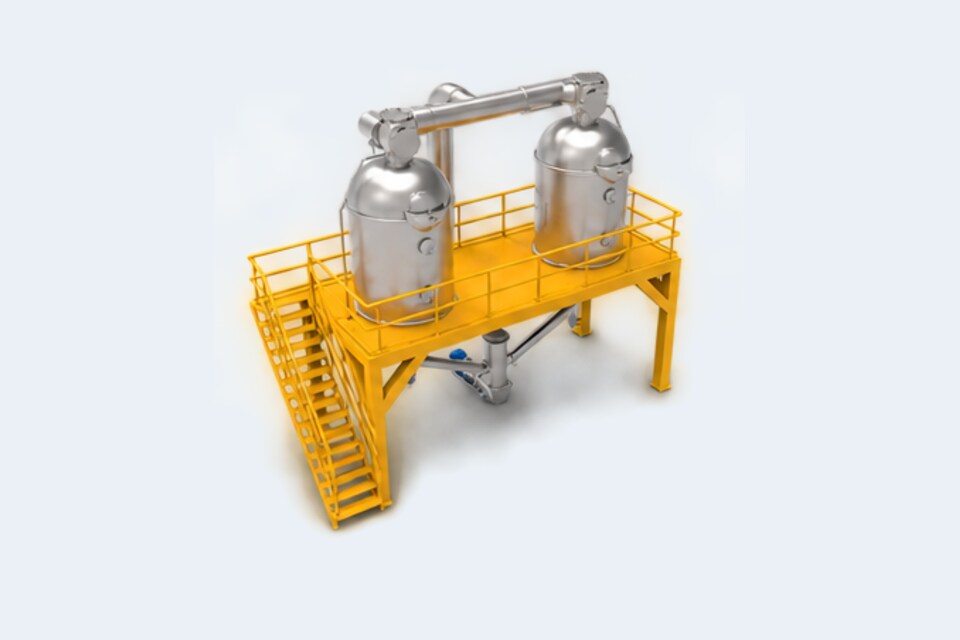
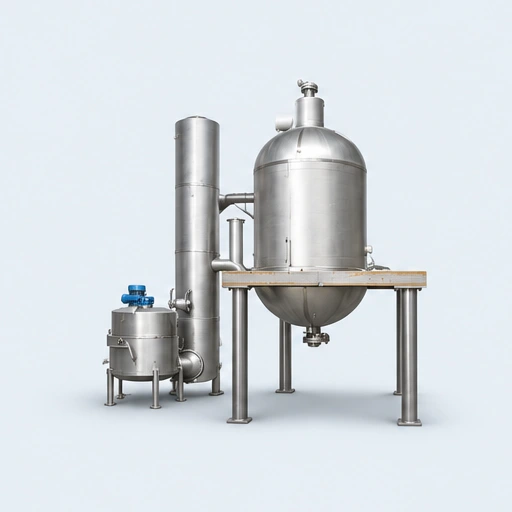
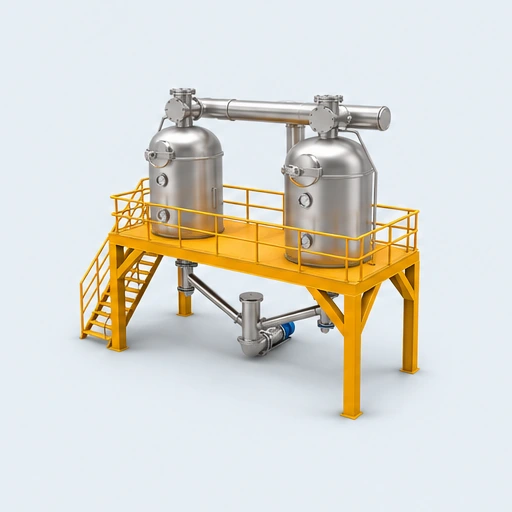
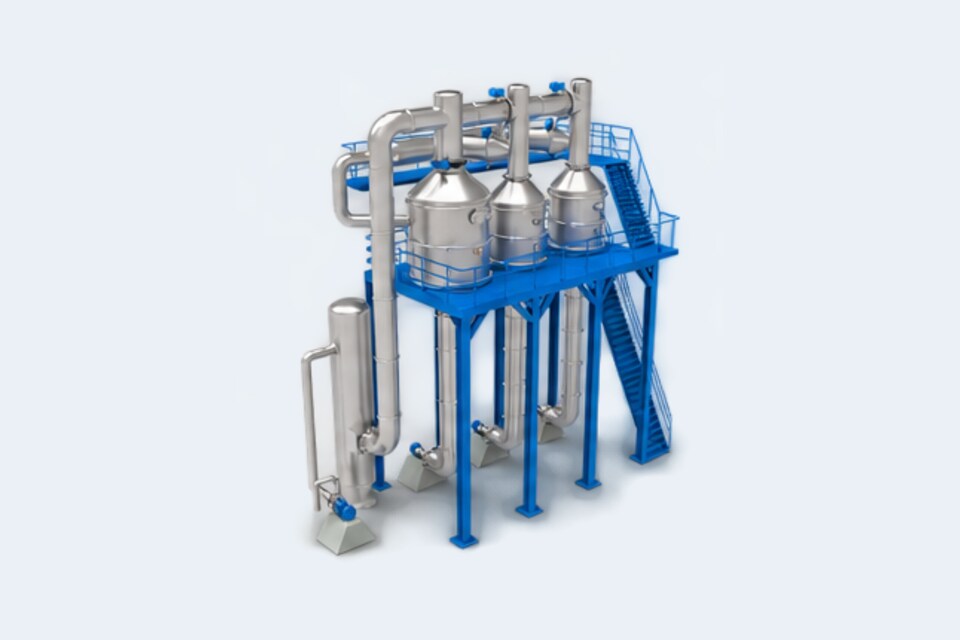
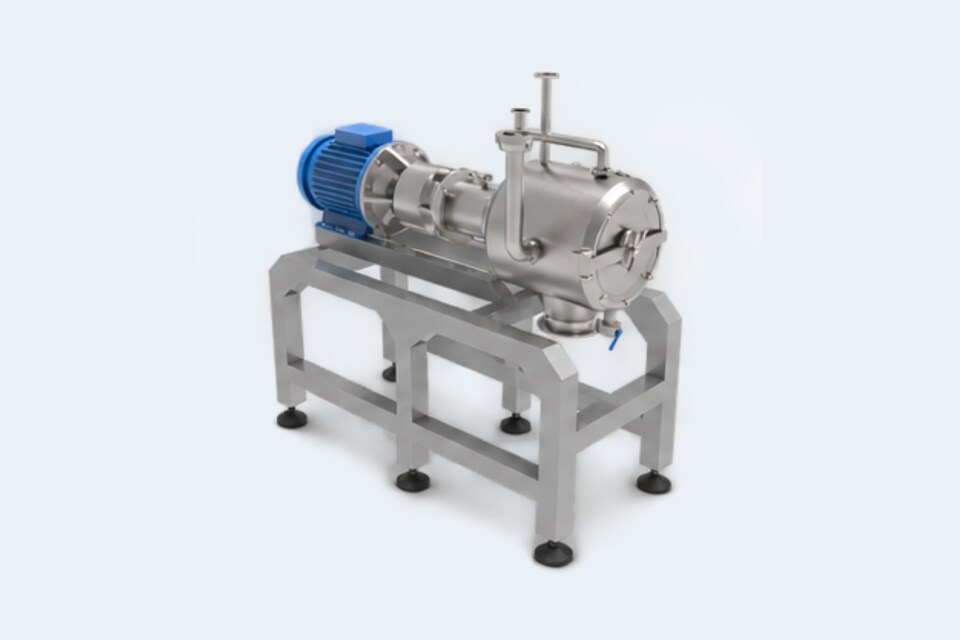
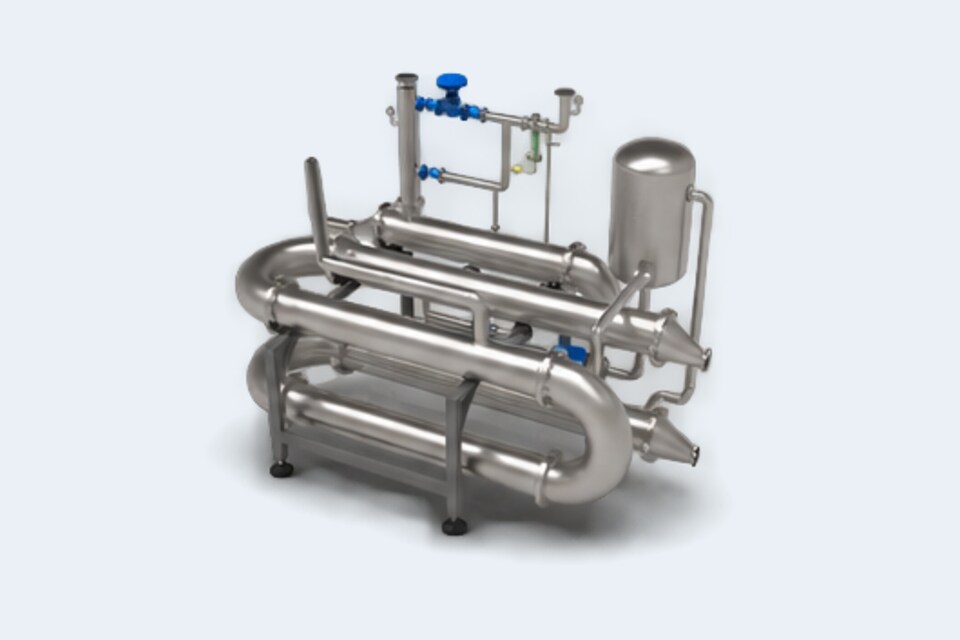
Tomato juice feeds automatically and gradually from a balance tank. A vessel with one, two or three bodies boils the product under vacuum to lower its boiling temperature. A shell heat exchanger occupies the lower third of the vessel, where paddles keep concentrate moving and limit local scorching. The batch process is suitable for smaller production runs and recipe changes.
The design depends on incoming and final Brix, heat-transfer coefficient, enthalpy, specific heat, feed and steam temperatures, steam pressure and mass flow, vacuum level, vessel material and thickness. The relevant performance measures are water evaporation capacity and steam economy. In a single effect, actual steam economy is below the ideal value of 1 kg of water evaporated per kg of steam. Warmer feed and a larger driving temperature difference can reduce required heating area; actual steam use depends on the installation. Fouling is managed by mechanical or chemical cleaning.
The batch design reference gives a minimum temperature difference of 14 °C and product residence of several hours. Example concentrations are 15–20 °Bx for purée and 25–36 °Bx for paste. About 5–7 kg of fresh tomatoes are required per kg of paste at the cited feed solids, with the ratio falling as the raw juice Brix rises.