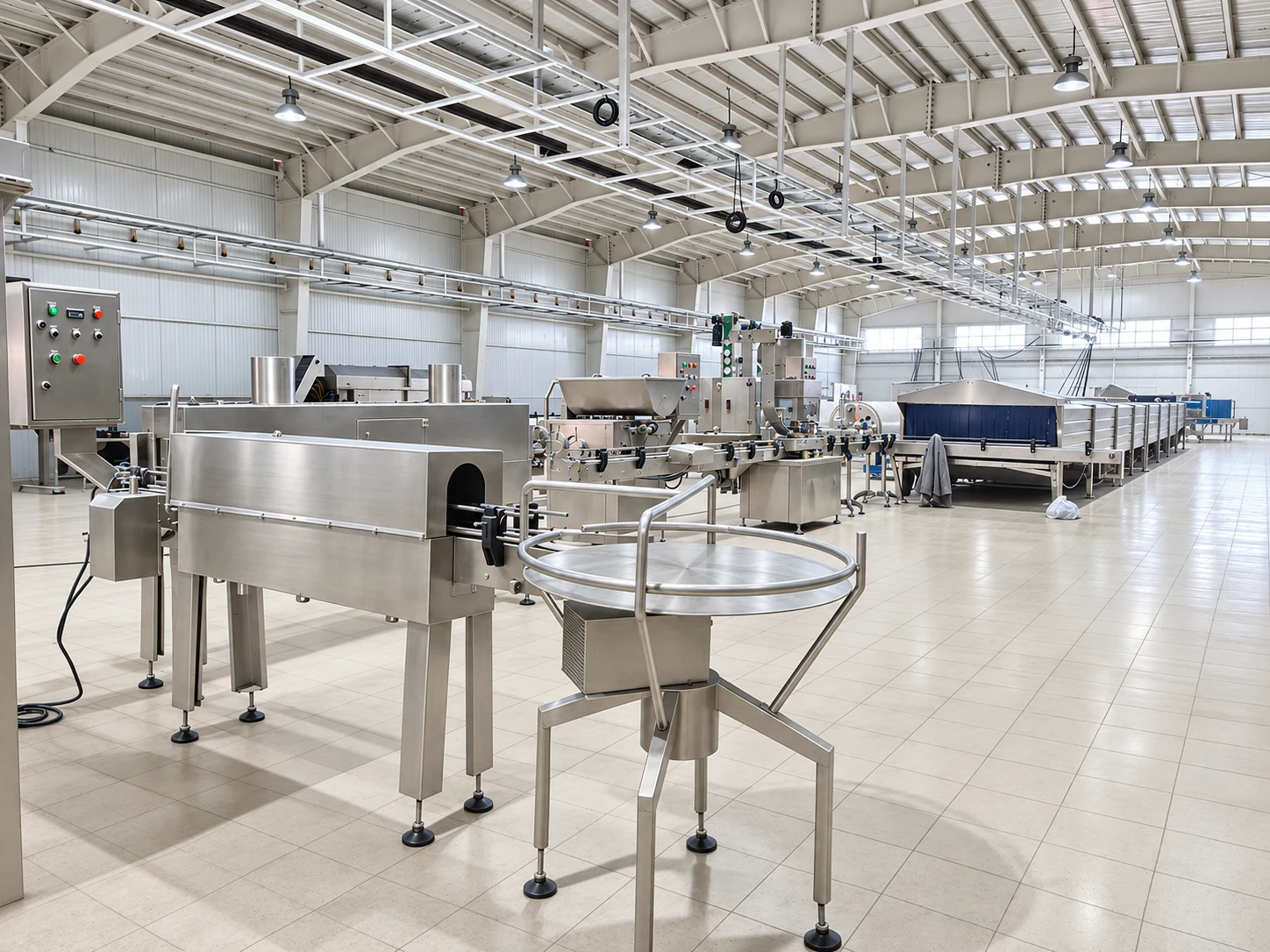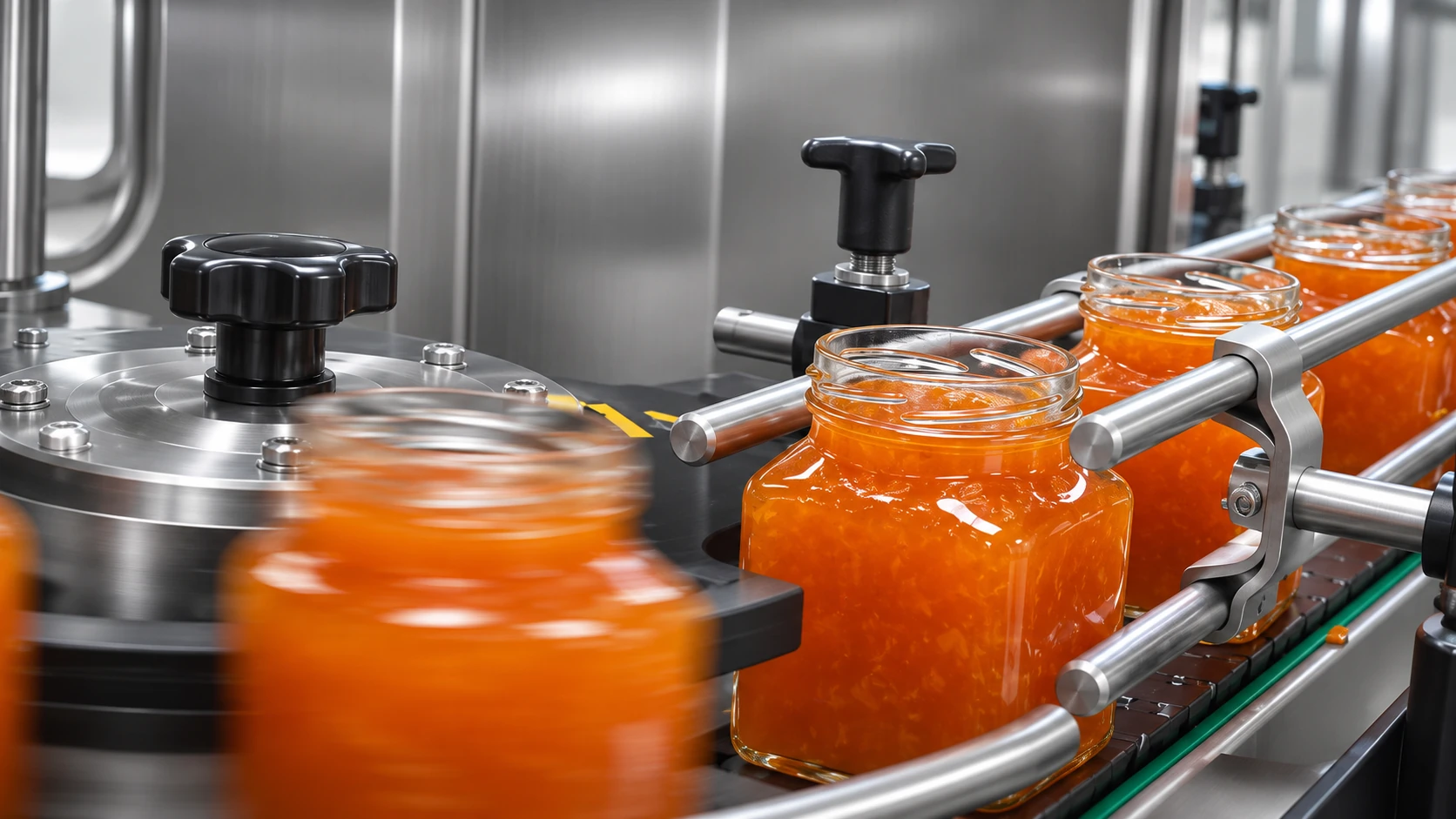
Orange jam jars on a filling and capping conveyor

Home › Production Lines › Jam & Fruit Compote Production Line

JAM & FRUIT COMPOTEPRODUCTION LINE

Integrated fruit preparation, cooking, concentration and packaging. Configured for 5–20 tonnes per day.

Configure your line Request an estimate

HIGH PERFORMANCE

RELIABLE DESIGN

PROCESS CONTROL

EASY TO MAINTAIN

COMPLETE JAM & FRUIT COMPOTE PRODUCTION PROCESS

1

Fruit receiving

2

Washing & sorting

3

Peeling or pitting

4

Cutting & preparation

5

Cooking or portioning

6

Product filling

7

Syrup dosing

8

Closing & treatment

9

Cooling & packing

Jam & Fruit Compote Processing Plant

Designed and manufactured by Liniea Industrial Group

The jam production line designed and manufactured by Liniea Industrial Group is an integrated industrial solution for fruit processing, cooking and packaging different jams and similar products. It covers raw-material preparation, crushing, cooking, concentration and final-product filling as a continuous, controlled process.

The line is designed for different capacities and can produce fruit jams in glass and metal packaging. Flexibility in capacity, product type and automation level makes it suitable for manufacturers serving domestic and export markets.

For jam, the main priorities are Brix control, consistency, colour and preservation of fruit pieces. For compote, uniform fruit cuts, clear syrup and intact fruit texture are more important. The line is engineered to allow changeover between jam and compote with minimal adjustments.

Engineering focuses on precise cooking temperature and time, preservation of natural fruit texture and colour, and fewer operational stoppages. Equipment selection and machinery arrangement maintain product uniformity and hygiene requirements throughout production.

  • Equipment selected for your product and packaging.
  • Process flow coordinated with factory space and utilities.
  • Final capacity and technical scope confirmed per project.
Request line catalogue

TECHNICAL SPECIFICATIONS

Available capacity5–20 tonnes/day
Factory infrastructure requirementsElectricity, water, and gas or diesel fuel
Required workforce3–8 people, depending on automation
Production line space requirement650–1,000 m²
National standards specified for the line214, 92, 7610, 1881, 14659
Equipment warranty18 months
After-sales service10 years
Get a custom solution

KEY FEATURES

  • Integrated fruit preparation, crushing, cooking, concentration and filling
  • Brix, consistency and colour control for jam
  • Uniform fruit cuts, clear syrup and intact texture for compote
  • Glass-jar and metal-can packaging options
  • Precise cooking temperature and time control
  • Flexible capacity and automation; changeover with minimal adjustments
  • Design, manufacture, installation, training and line-performance optimisation

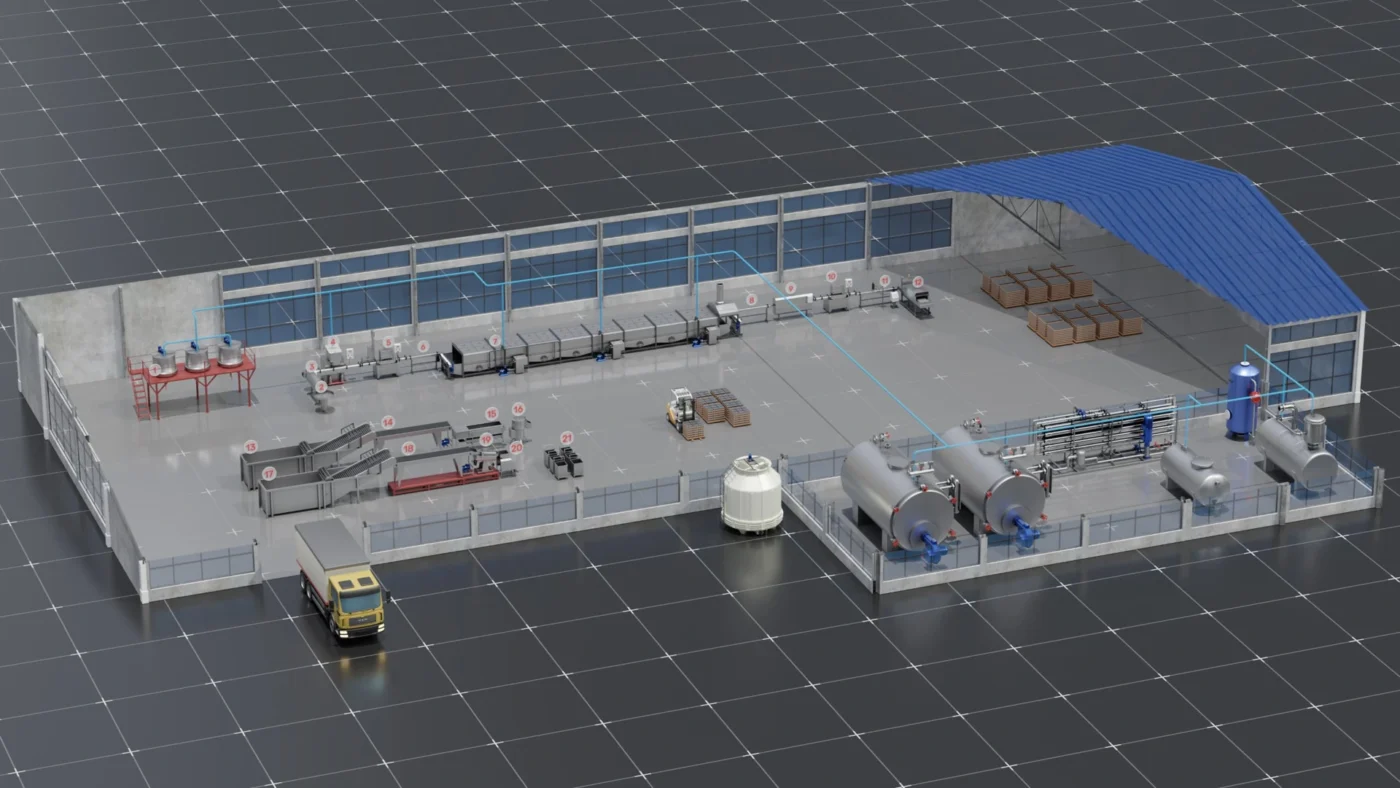
Layout design

Jam and fruit compote production line machinery

  1. Peeler
  2. Grater
  3. Destemmer
  4. Pitter
  5. Cooking kettle
  6. Six-nozzle filler
  7. Glass jar capper
  8. Pasteurizing tunnel
  9. Sleeve applicator
Jam and fruit compote production line equipment layout

Jam and fruit compote production line layout supplied with the project materials.

Layout design

Jam and fruit compote production line machinery

Jam and fruit compote production line equipment layout

Jam and fruit compote production line layout supplied with the project materials.

  1. Peeler
  2. Grater
  3. Destemmer
  4. Pitter
  5. Cooking kettle
  1. Six-nozzle filler
  2. Glass jar capper
  3. Pasteurizing tunnel
  4. Sleeve applicator

MAIN MACHINES INCLUDED

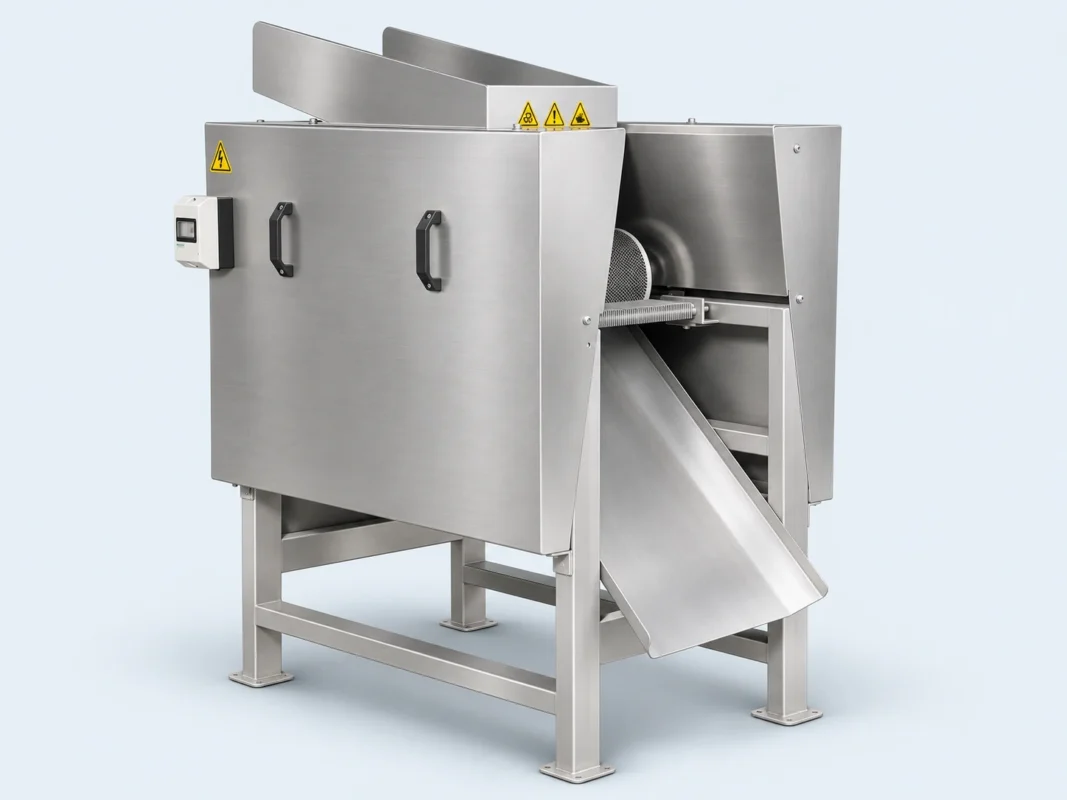
Cherry Destemmer

Separating stems from cherries and sour cherries.

Rubber-coated steel rods rotate in opposite directions and make the fruit turn. When a stem enters the gap between the rods, it is drawn inward and separated from the fruit.

GM3241 · 800–1,000 kg/hour

Pitter — complete machine view

Cherry Pitter

Separating stones from cherries and sour cherries.

This roller-based machine positions sour cherries between two fixed grooves and a moving roller. The soft fruit flesh opens and is drawn into the machine, while the hard stones remain on the rollers and leave through the groove.

GM3242 · 800–1,000 kg/hour

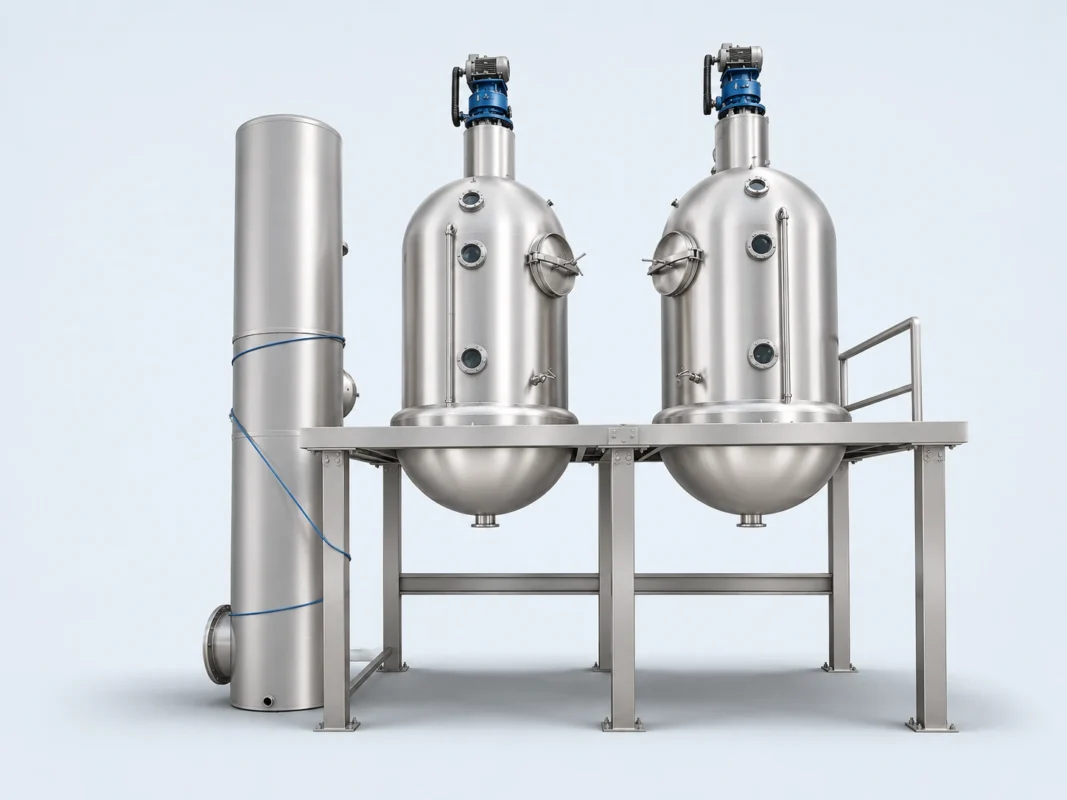
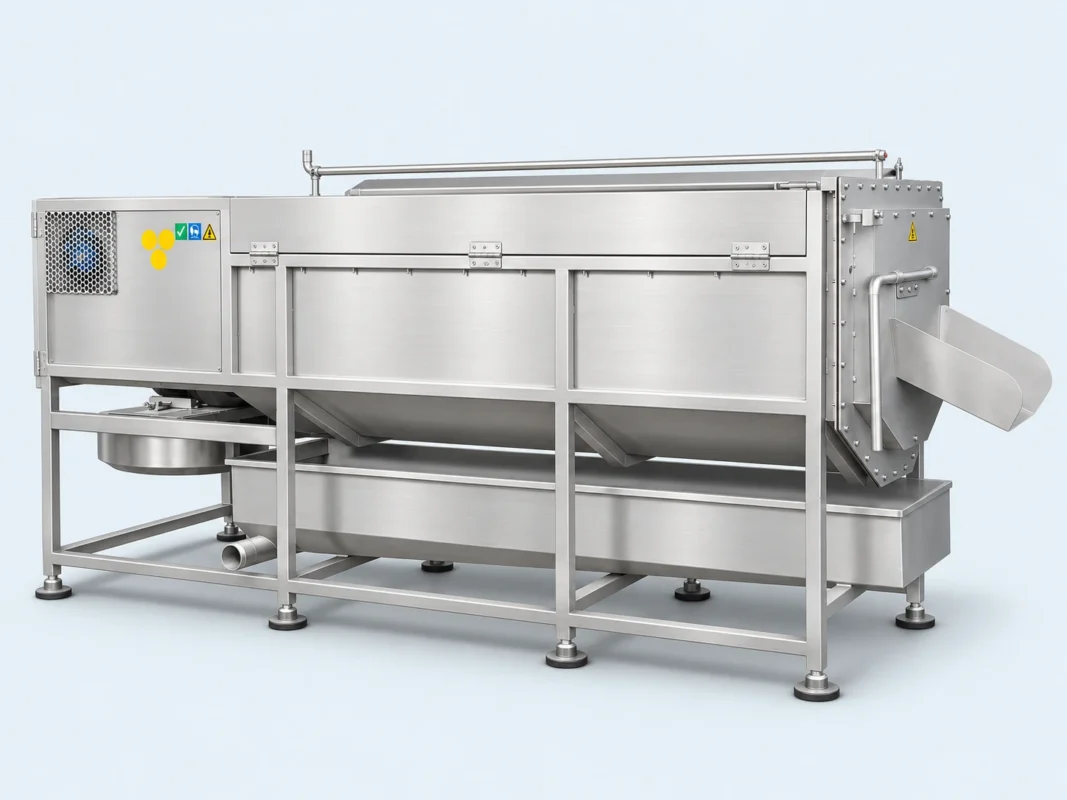
Kettle — complete machine view

Jam Cooking Kettle

Cooking jam and blanching fruit for compote.

The jam cooking kettle is an open atmospheric vessel with a steam jacket and an agitator. Heat passes through the jacket into the product, while the agitator promotes uniform cooking and even mixing of additives.

GM3238 · 1 tonne/hour

The image shows a closed-vessel installation as a workshop reference.

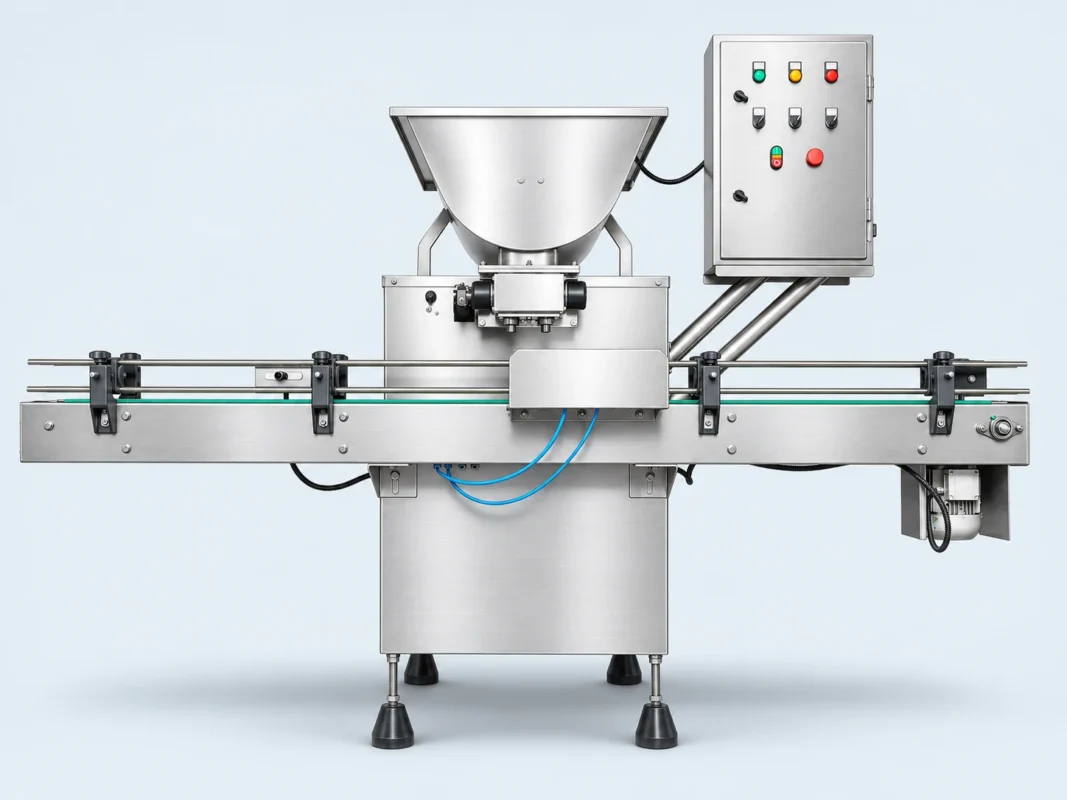
Six-Nozzle Linear Filler

Filling thin and thick products into different containers.

The linear filler has six servo-controlled nozzles for filling cans, glass jars and PET containers in different weights. A PLC detects containers under the nozzles and controls nozzle opening and closing to transfer product from the hopper into the containers.

FM3104

Capper — complete machine view

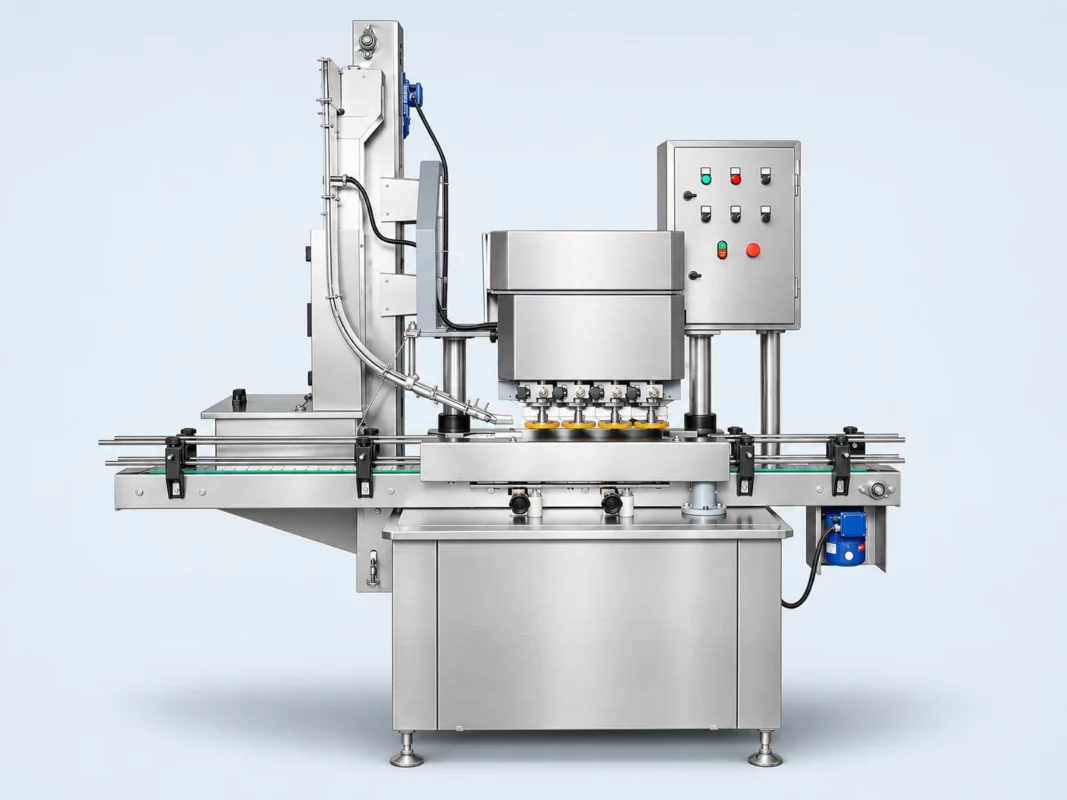
Eight-Head Jar Capper

Closing screw caps on glass and PET containers.

The eight-head jar capper applies controlled torque from the sides and closes screw caps in four stages. The first two heads act counter to the thread, and the remaining six gradually tighten the cap. Automatic cap transfer is an important feature of the machine.

CMS4106 · 5,000 containers/hour

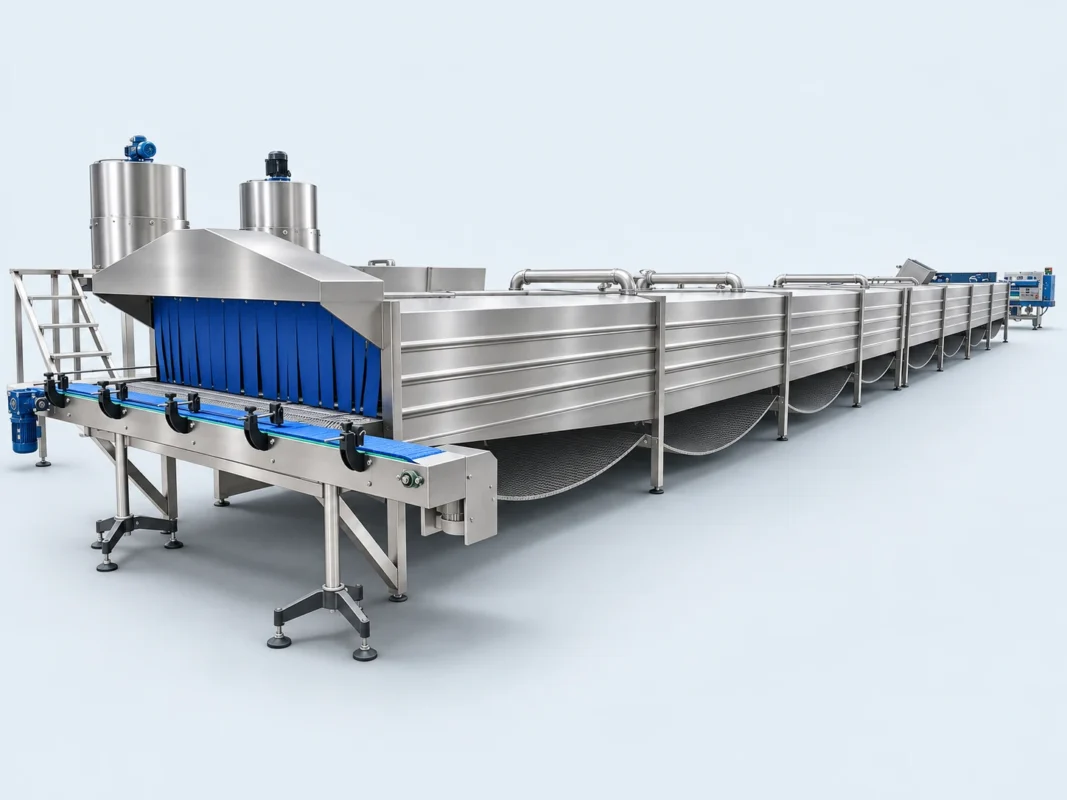
Pasteurizer — complete machine view

Pasteurizing Tunnel

Pasteurizing products after container closing.

The tunnel applies uniform, controlled heat through three thermal phases after closing. This stage supports jam and compote shelf life, microbial safety and stable finished-product quality.

GM3246

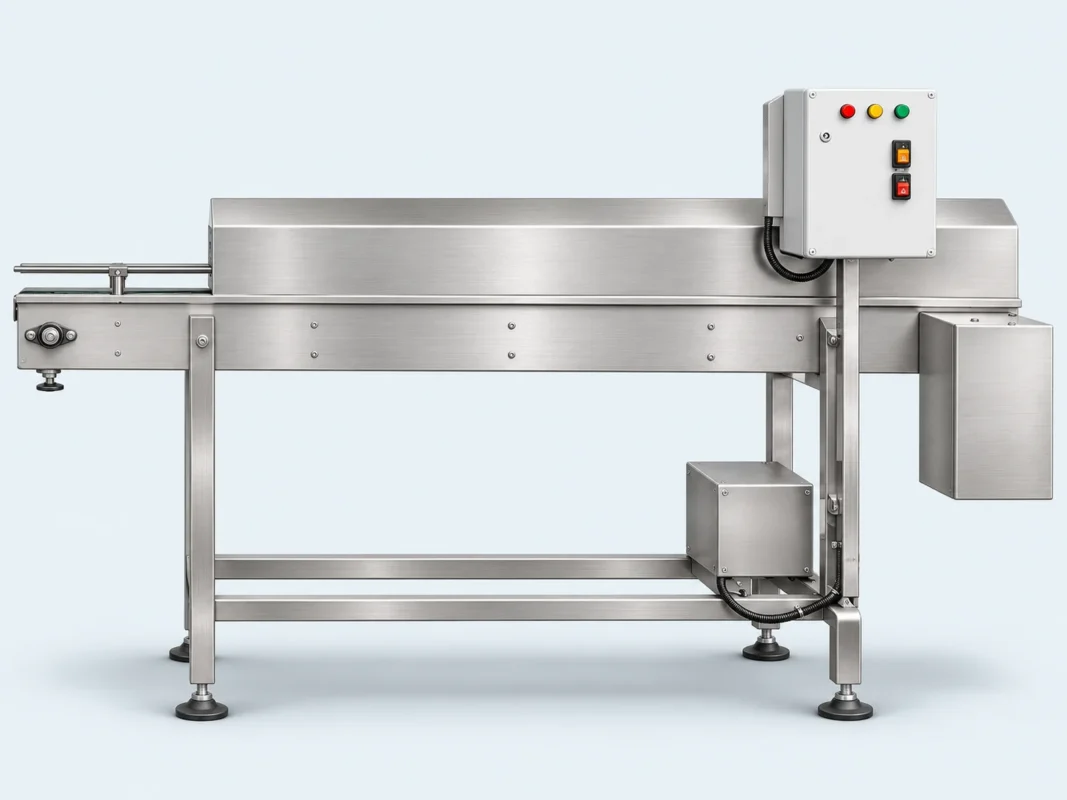
Stainless-steel exhaust tunnel

Exhaust Tunnel

Removes air from filled containers before closing.

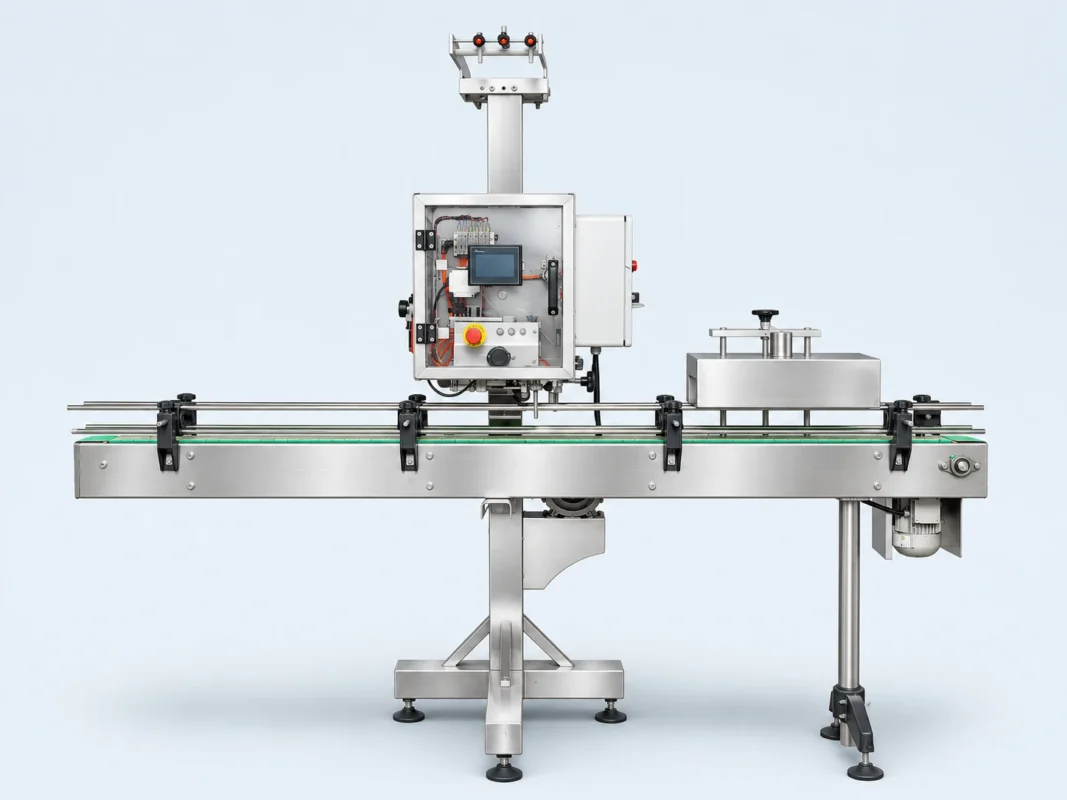
Container sleeve applicator

Sleeve Applicator

Applies sleeves to finished containers.

Two-piston filling machine

Two-Piston Filler

Uses two pistons to dose product into containers.

Fruit peeling machine

Fruit Peeler

Removes fruit peel during preparation.

Six main machines are specified in the supplied text. Four additional machines follow the supplied image folders; these photo-only items are not linked to detail pages.

Explore Liniea projects

View projects

ENGINEERED FOR YOUR PROCESS

How Liniea builds your jam and fruit compote machinery

Liniea Industrial Group manufactures jam, compote and canned-food production lines. It provides line design and manufacture, installation and commissioning, operator training and production-line performance optimisation tailored to the needs of each production facility.

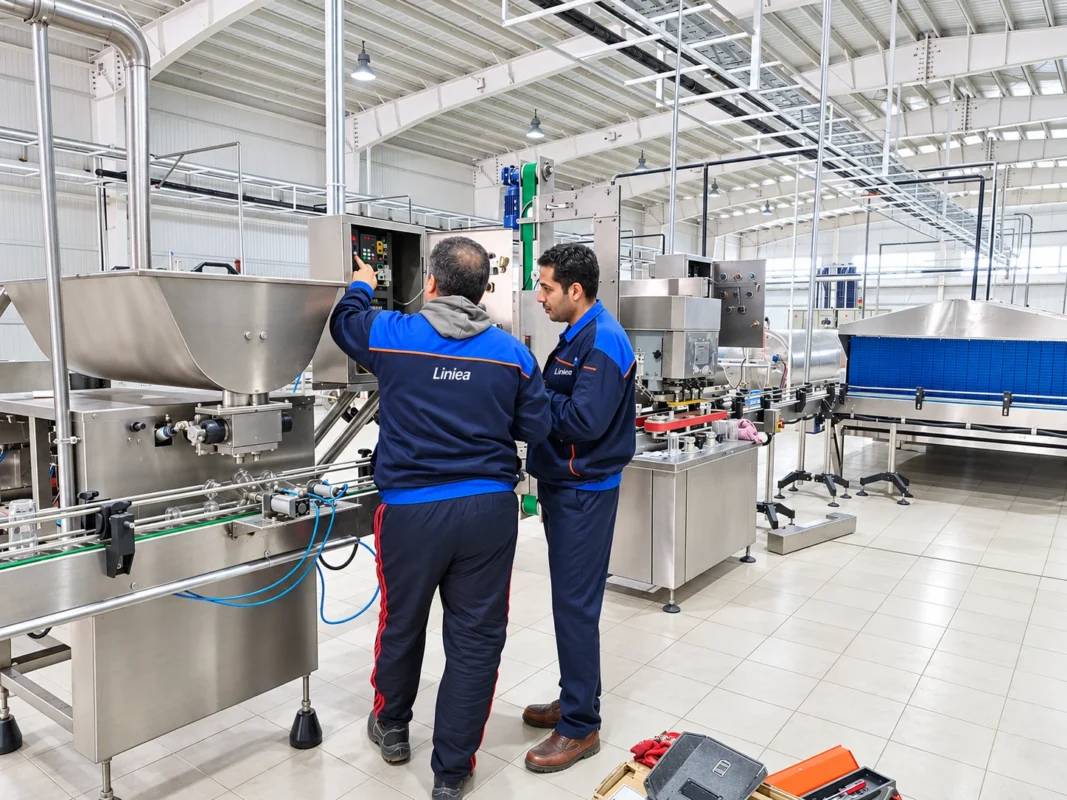
Liniea technicians working on fruit-processing equipment

From process requirements to a coordinated equipment package.

01

Process specification

Define the target capacity, product range, packaging format and level of automation, including fruit preparation, cooking temperature, cooking time, Brix and product texture.

02

Equipment engineering

Coordinate fruit preparation, cooking, concentration, transfer, filling, closing, pasteurization and final packaging as an integrated system.

03

Fabrication & assembly

Manufacture the machinery to suit the agreed production process and factory infrastructure.

04

Trial production & optimisation

Support trial production and optimise the performance of the complete production line.

How Liniea helps set up your jam and compote factory

One coordinated route from site planning to commissioning.

Feasibility

Define daily output, the product portfolio, investment budget, packaging and automation level.

Factory layout

Plan fruit receiving and sorting, preparation, cooking, hot packaging, jar or can storage, finished-product storage and the quality-control laboratory.

Utilities

Plan hygienic water, industrial three-phase electricity, steam or a stable heat source, compressed air and hygienic wastewater disposal according to the selected equipment and site conditions.

Installation

Coordinate installation and commissioning of the production line and its auxiliary equipment.

Commissioning

Carry out operational tests, train operators and optimise the performance of the complete line.

The project scope is tailored to your site, product and production requirements.

Jam and compote line: your questions answered

What determines the cost of setting up a jam and compote production line?

Investment depends directly on hourly output, the variety of fruit to be processed and the level of cooking-process control. The heating system—an atmospheric kettle or a vacuum system—Brix-control precision, hot-filling quality and the packaging format, whether glass jars or metal cans, are major cost factors.

Automation, fruit-washing and preparation equipment, and the hygiene design needed for national and export-market standards also influence the final estimate. Optimised line design and controlled energy use can support a faster return on investment; the actual result depends on the project and market.

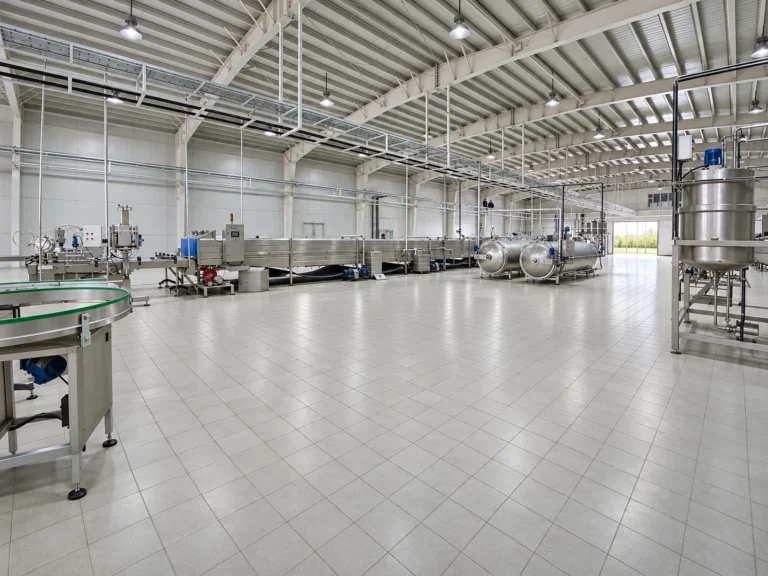
Factory area is determined by capacity, fruit type and the arrangement of processing equipment. Main areas include fruit receiving and sorting, preparation, the cooking hall, hot packaging, empty-jar or can storage, finished-product storage and a quality-control laboratory.

Infrastructure includes hygienic water at a suitable flow rate, industrial three-phase electricity, steam generation or a stable heat source, compressed air and hygienic wastewater disposal. Correct material flow and separation of clean and semi-clean zones are important for hygiene authorisation and stable operation.

Shared cooking and hot-filling systems can support marmalade, fruit jelly, fruit purée and fruit sauces. Recipe adjustment and precise Brix control can also accommodate reduced-sugar or diet formulations, subject to validation of the selected recipe and preservation process.

Adjustable cooking temperature and viscosity provide flexibility for seasonal market needs. This can improve use of the investment and reduce dependence on a single product.

In a semi-automatic line, operators perform some tasks such as fruit feeding, cooking adjustments or container transfer. Initial investment is lower, while dependence on labour is greater.

In a fully automatic line, temperature, cooking time, Brix, product transfer and filling are integrated and programmable. This supports more uniform consistency, less fruit waste and higher output at large production volumes. Selection should follow an economic analysis, the target market and the factory’s development strategy.

With modular engineering, capacity can be increased by adding cooking kettles, upgrading the filler or increasing packaging speed. Controls can be upgraded to advanced PLC systems and intelligent energy-consumption monitoring.

Complementary equipment such as automatic cartoning or high-speed labelling can be added without redesigning the whole factory when expansion has been planned. This approach reduces investment risk and supports gradual growth with the market.

€

How much does a jam and compote production line cost?

Hourly output, fruit range, atmospheric or vacuum cooking, Brix control, hot filling, packaging, automation, hygiene design and energy use determine the investment.

Liniea focuses on equipment selection that suits the project and allows future expansion; a project-specific quotation follows engineering review.

EquipmentInstallationUtilities
Discuss your project budget

Jam and compote production insights

Jam and Compote Production Line Cost: What Shapes the Budget?

Budget a jam and compote factory around output, fruit preparation, cooking control, filling, packaging and the services required by the site.

Read article
What Else Can a Jam and Compote Line Produce?

Explore product diversification through shared cooking and hot-filling systems, with recipe and process validation for each product.

Read article
Choosing the Right Capacity for a Jam and Compote Production Line

Choose capacity from saleable output, fruit supply, cooking duties and the packaging schedule rather than machine speed alone.

Read article
Explore all 12 planning guides

READY TO START YOUR PRODUCTION PROJECT?

Discuss your product, capacity and factory requirements with Liniea.