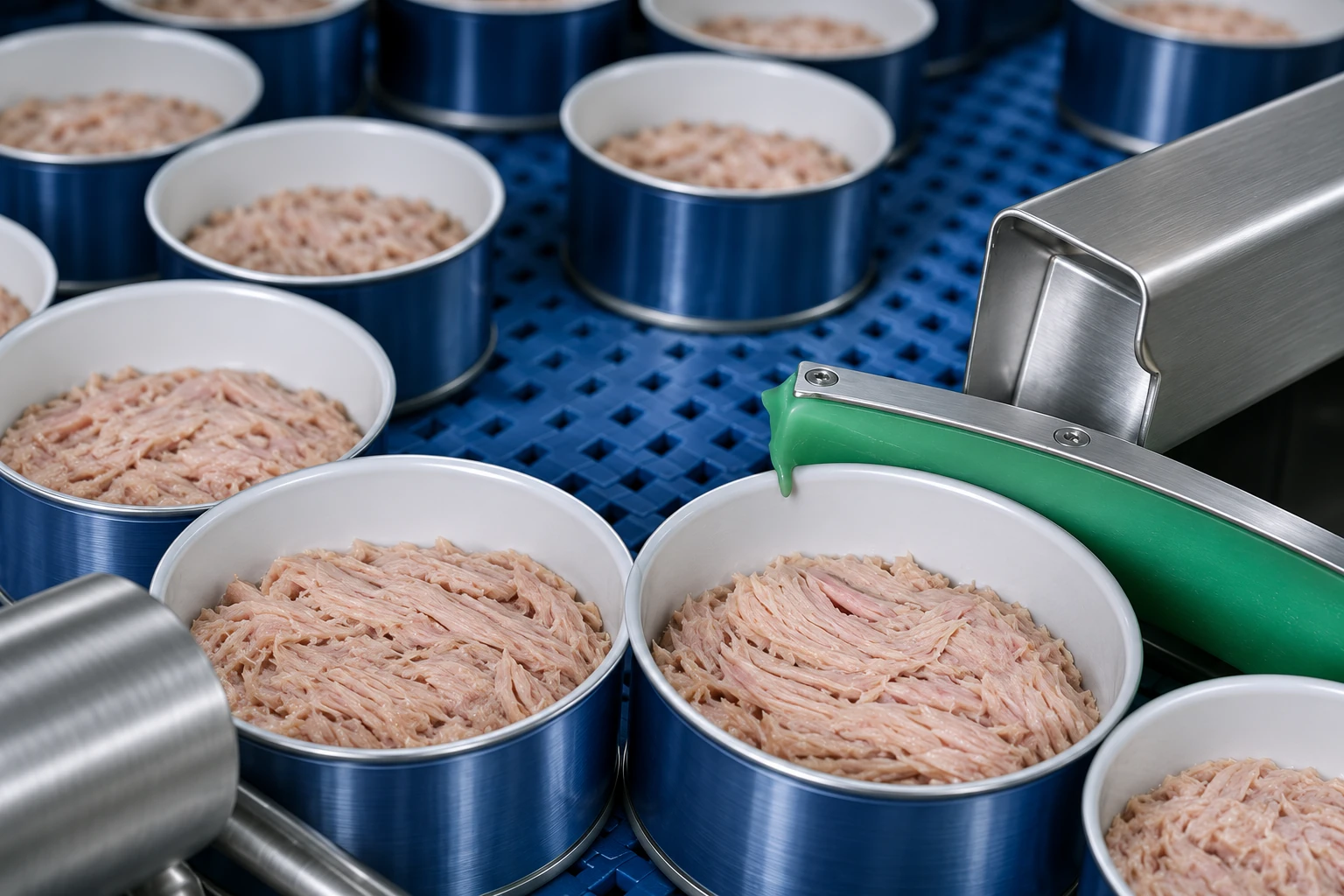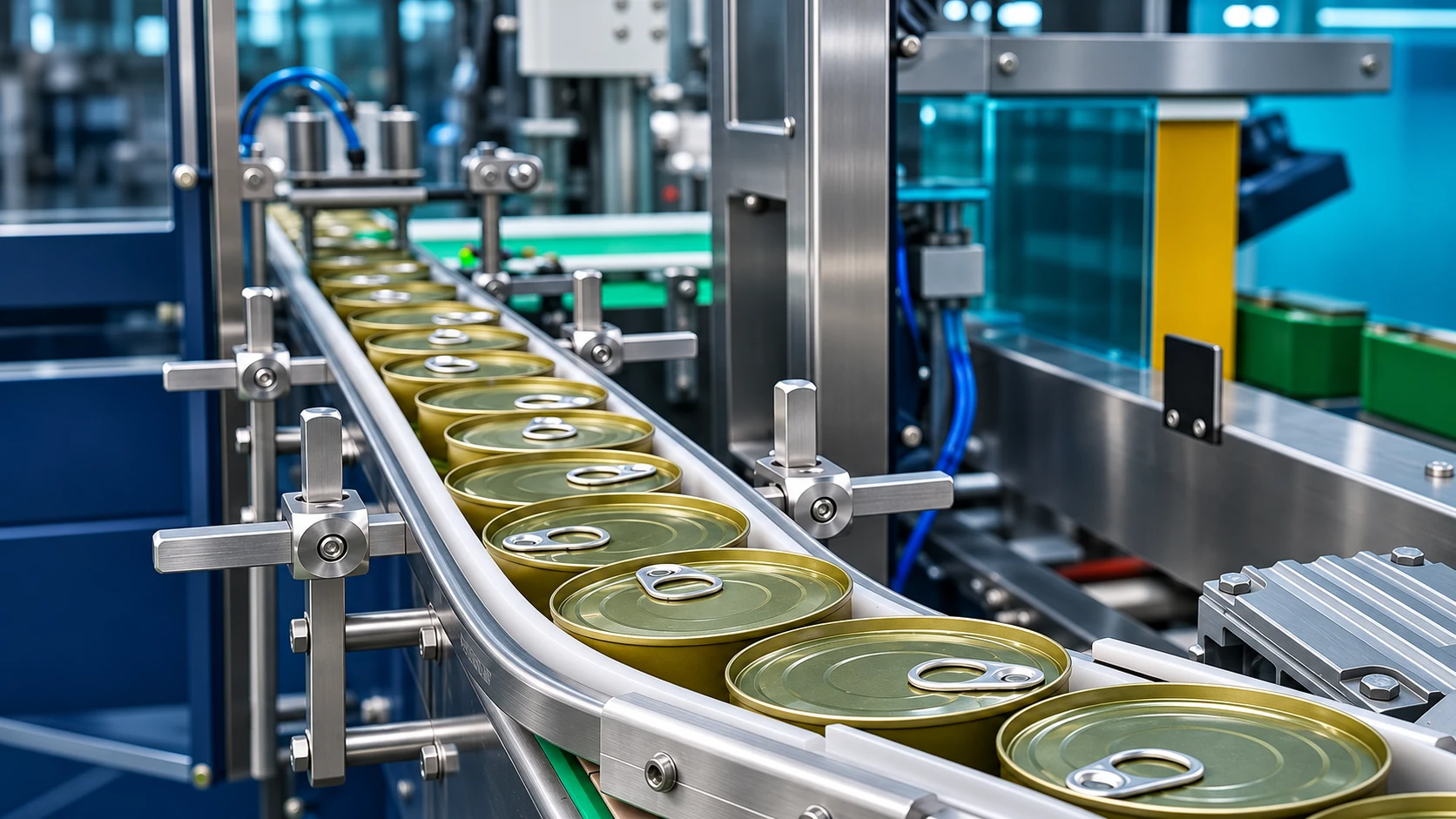
Sealed pull-tab tuna cans on a stainless steel production conveyor

Home › Production Lines › Canned Tuna Production Line

CANNED TUNAPRODUCTION LINE

Process tuna from raw-fish preparation through cooking, cleaning, filling, oil or brine dosing, seaming and retort treatment.

Configure your line Request an estimate

HIGH PERFORMANCE

RELIABLE DESIGN

PROCESS CONTROL

EASY TO MAINTAIN

COMPLETE CANNED TUNA PRODUCTION PROCESS

1

Fish receiving

2

Thawing & cutting

3

Steam cooking

4

Cleaning & inspection

5

Tuna filling

6

Oil or brine dosing

7

Can seaming

8

Retort & cooling

9

Labeling & packing

Canned Tuna Processing Plant

Designed and manufactured by Liniea Industrial Group

The canned tuna production line designed by Liniea Industrial Group is an integrated industrial system for processing, producing and packaging tuna products, including longtail tuna, yellowfin tuna and other tuna varieties. Each line is engineered and implemented according to the factory’s target capacity, product type, packaging format and required level of automation.

The line takes hygiene requirements and process-control parameters into account to support stable, standardised production on an industrial scale.

The canned tuna production line can produce tuna in vegetable oil, brine, olive oil and flavoured formulations. It can also accommodate canned chicken, turkey, meat and different stews without fundamental changes to the line structure, subject to the product-specific conditions described below.

The machinery covers the complete process: fish receiving and preparation, precooking, cleaning and filling, can seaming, retort sterilisation, cooling, quality control and final packaging. Together, these stages form the main production infrastructure for canned seafood protein products.

  • Equipment selected for your product and packaging.
  • Process flow coordinated with factory space and utilities.
  • Final capacity and technical scope confirmed per project.
Request line catalogue

TECHNICAL SPECIFICATIONS

Available capacity30,000–200,000 cans of 180 g per day
Factory infrastructure requirementsElectricity, water, and gas or diesel fuel
Required workforce3–8 people, depending on the level of automation
Production line space requirement650–1,000 m²
National standards specified for the line1881, 2870, 4854, 713, 2869, 8530
Equipment warranty18 months
After-sales service10 years
Get a custom solution

KEY FEATURES

  • Integrated fish receiving and preparation
  • Steam precooking, cleaning and filling
  • Oil, brine, olive-oil and flavoured tuna formulations
  • Coordinated can seaming, retort sterilisation and cooling
  • Quality control and final packaging
  • Compatible additional protein products subject to authorisation and engineering review
  • Design, manufacture, installation, operational testing, training and performance optimisation

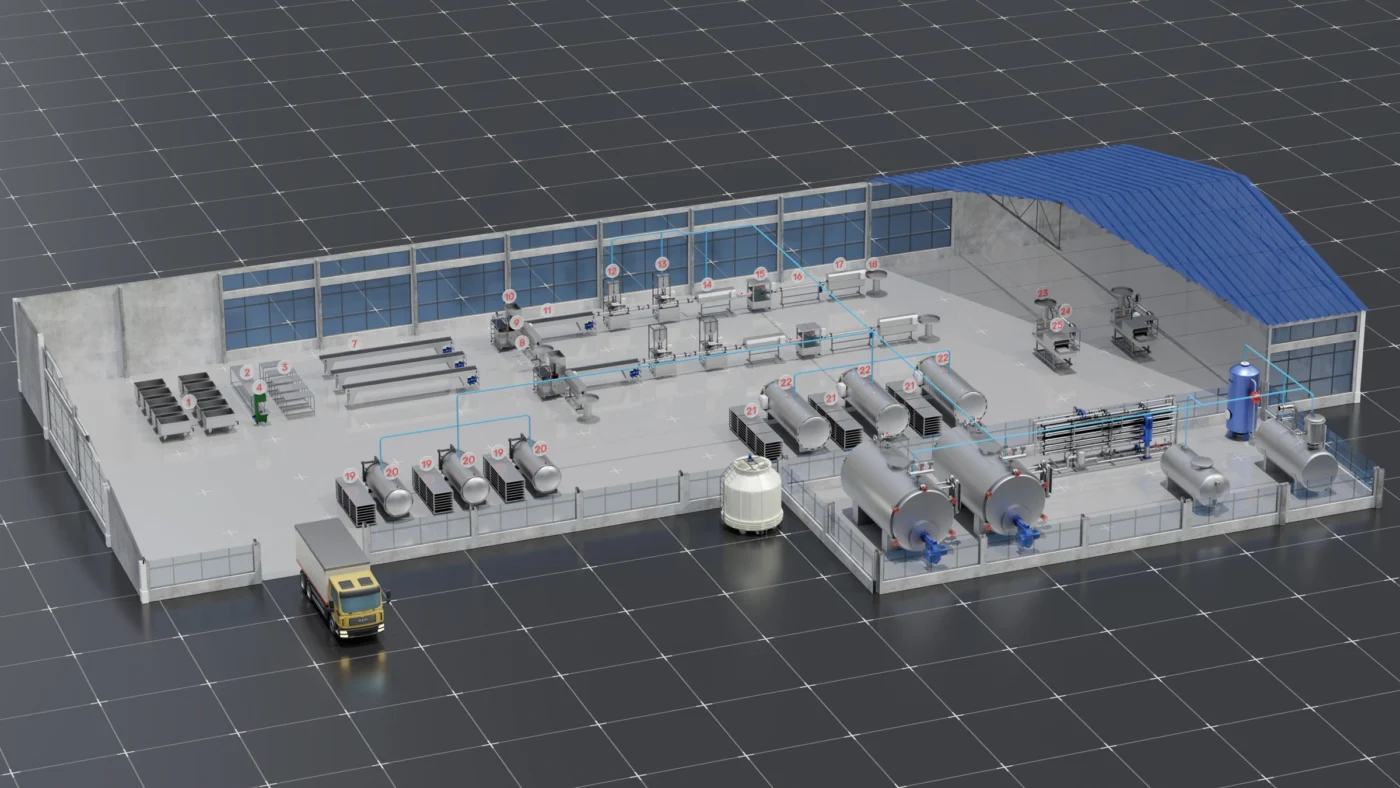
Layout design

Canned tuna production line machinery

  1. Fish cutting bandsaw
  2. Fish steam cooker
  3. Fish cleaning and filleting table
  4. Tuna filler
  5. Salt doser
  6. Oil doser
  7. Exhaust tunnel
  8. Metal can seamer
  9. Retort autoclave
Production line layout supplied in the tuna project layout folder

Canned tuna production line layout supplied with the project materials.

Layout design

Canned tuna production line machinery

Production line layout supplied in the tuna project layout folder

Canned tuna production line layout supplied with the project materials.

  1. Fish cutting bandsaw
  2. Fish steam cooker
  3. Fish cleaning and filleting table
  4. Tuna filler
  5. Salt doser
  1. Oil doser
  2. Exhaust tunnel
  3. Metal can seamer
  4. Retort autoclave

MAIN MACHINES INCLUDED

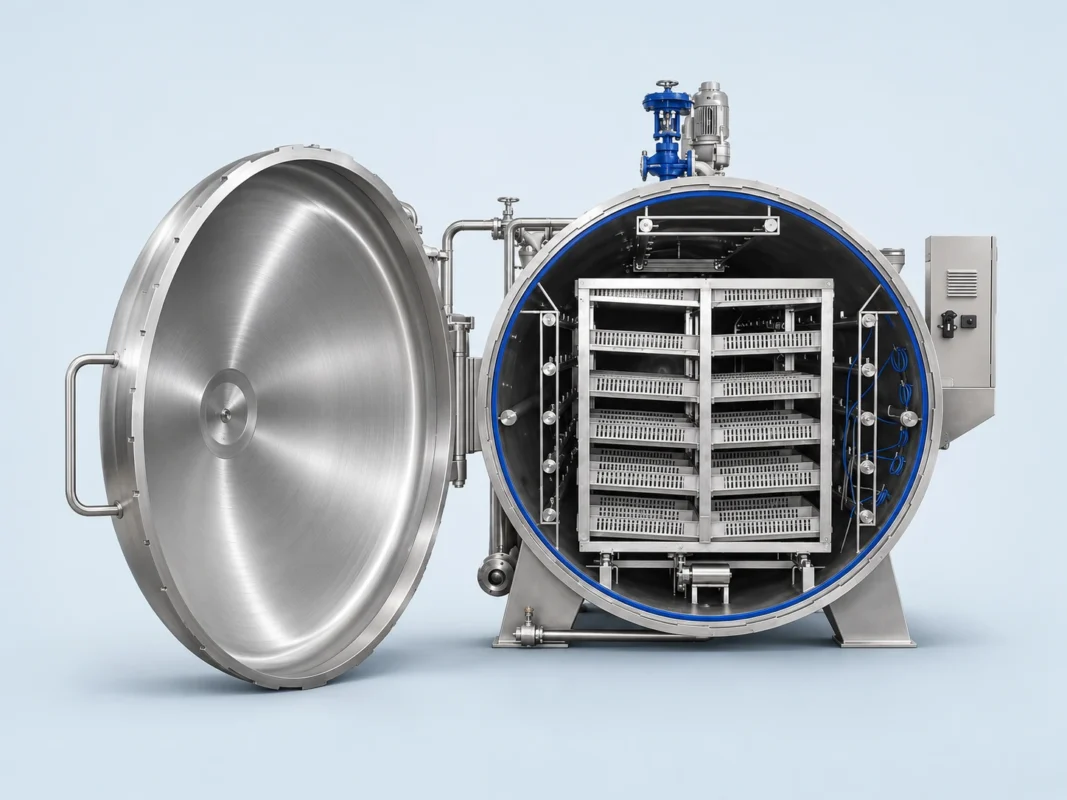
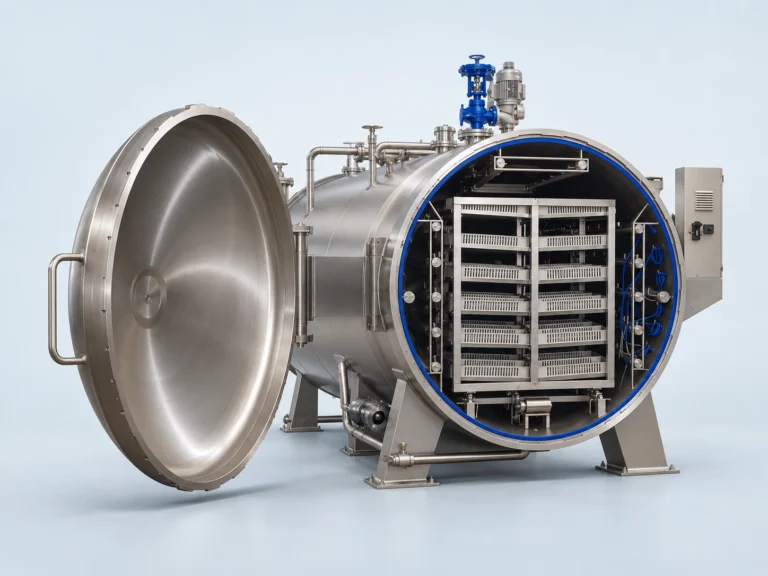
Complete horizontal fish steam cooker with open door and internal racks

Tuna Steam Cooker

Precooking fish to facilitate bone removal and prepare the flesh for further processing.

This thermal unit is designed to precook fish using steam, a process needed to facilitate tissue separation and efficient deboning. Precise control of the temperature profile and cooking time helps preserve the structural integrity of fish protein.

GM2103

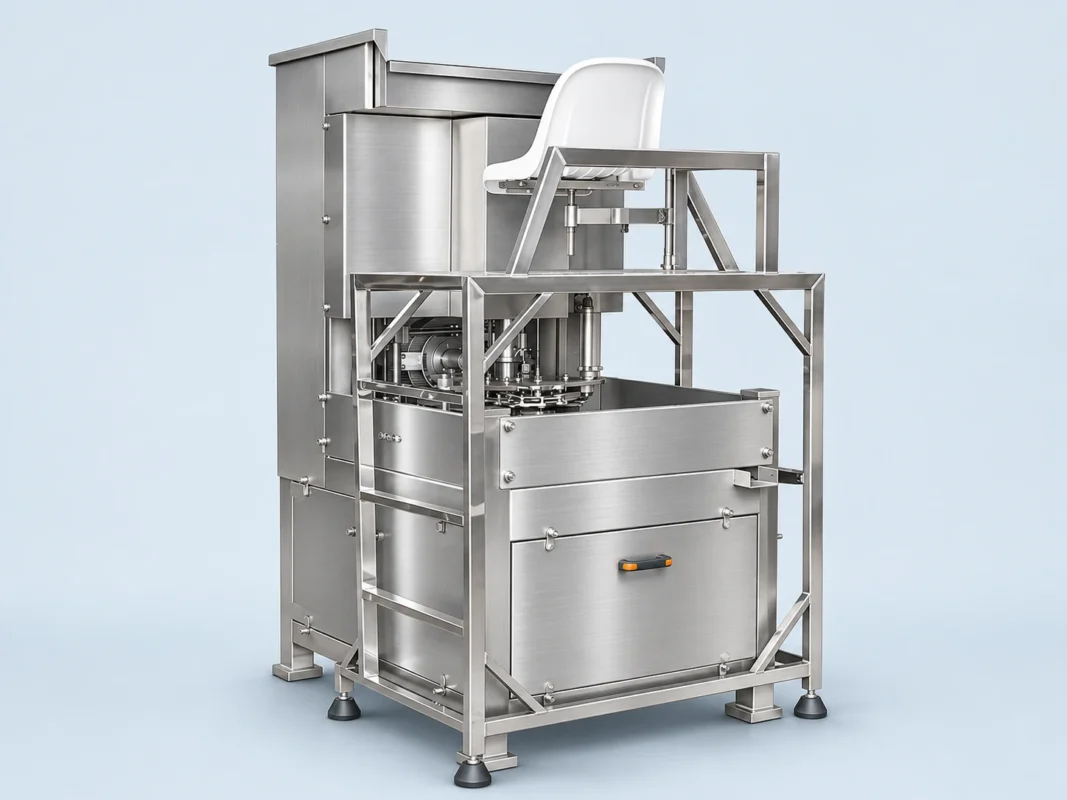
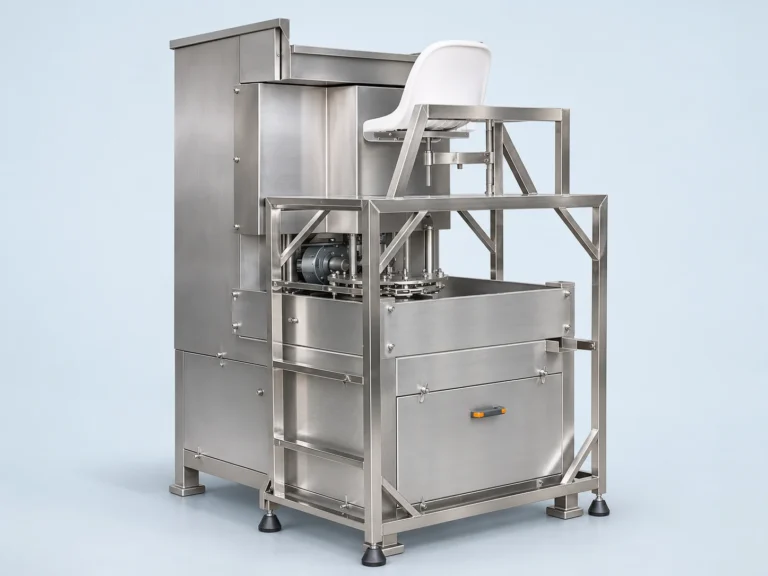
Complete tuna filling machine with upper operator seat and stainless steel frame

Tuna Can Filling Machine

Filling tuna into metal cans.

The filling machine distributes fish pieces evenly into cans according to a predetermined net weight. Its precise volumetric mechanisms support packaging accuracy at industrial production volumes in accordance with the specified standard.

FM3106 · 60 cans/minute

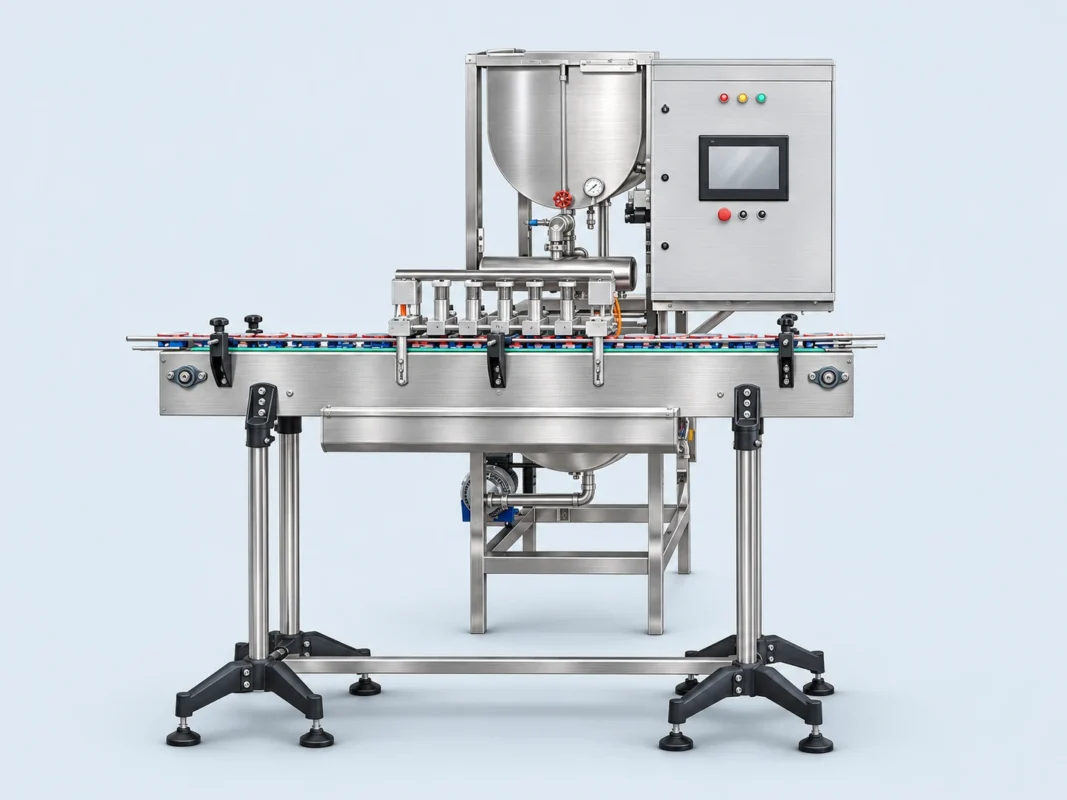
Complete automatic liquid dosing machine with hopper control cabinet and conveyor

Automatic Oil & Brine Doser

Adding brine or oil to cans after the tuna has been filled.

Using flow-controlled nozzles, this system accurately dispenses the required volume of edible oil into the space above the product without spillage. Continuous calibration helps maintain consistent moisture and fat parameters in the finished canned product.

FM3107 · 100–120 containers/minute

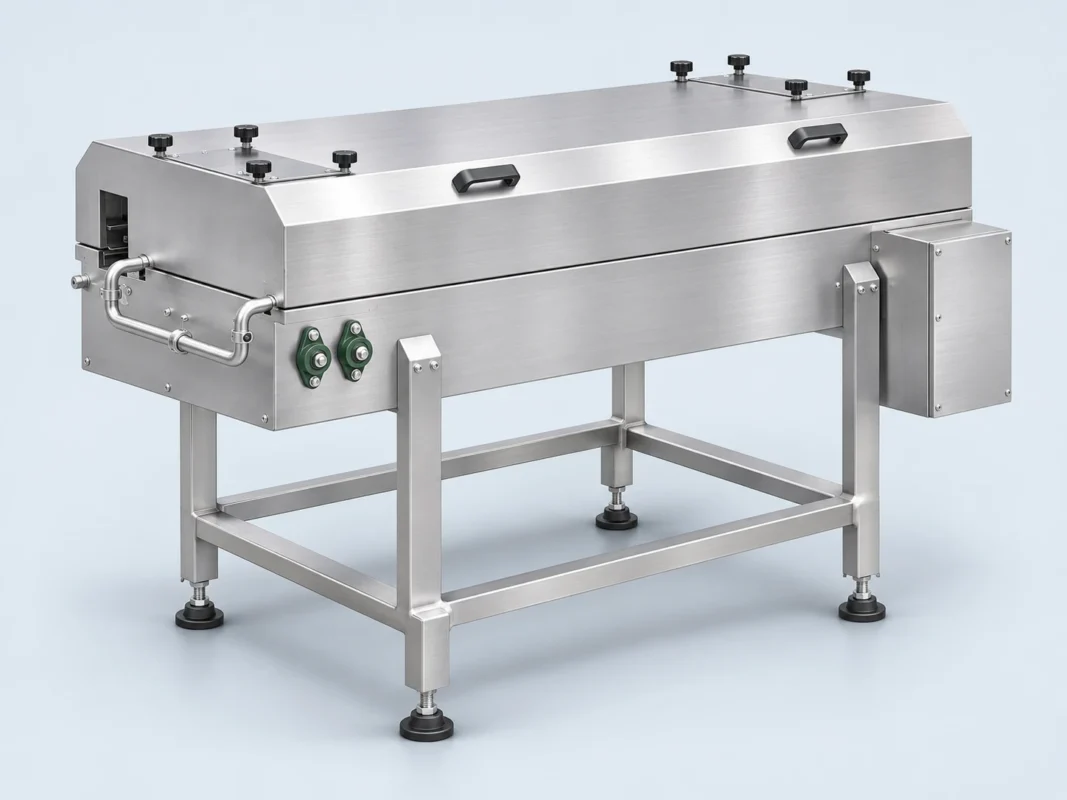
Complete stainless steel can exhaust tunnel with enclosed processing chamber

Can Exhaust Tunnel

Removing air from cans after filling.

The exhaust tunnel applies controlled heat under atmospheric conditions to remove air and trapped gases from the can headspace. This step supports the conditions required for effective sterilisation and helps prevent can deformation in subsequent processing stages.

GM3234 · 150–160 cans/minute

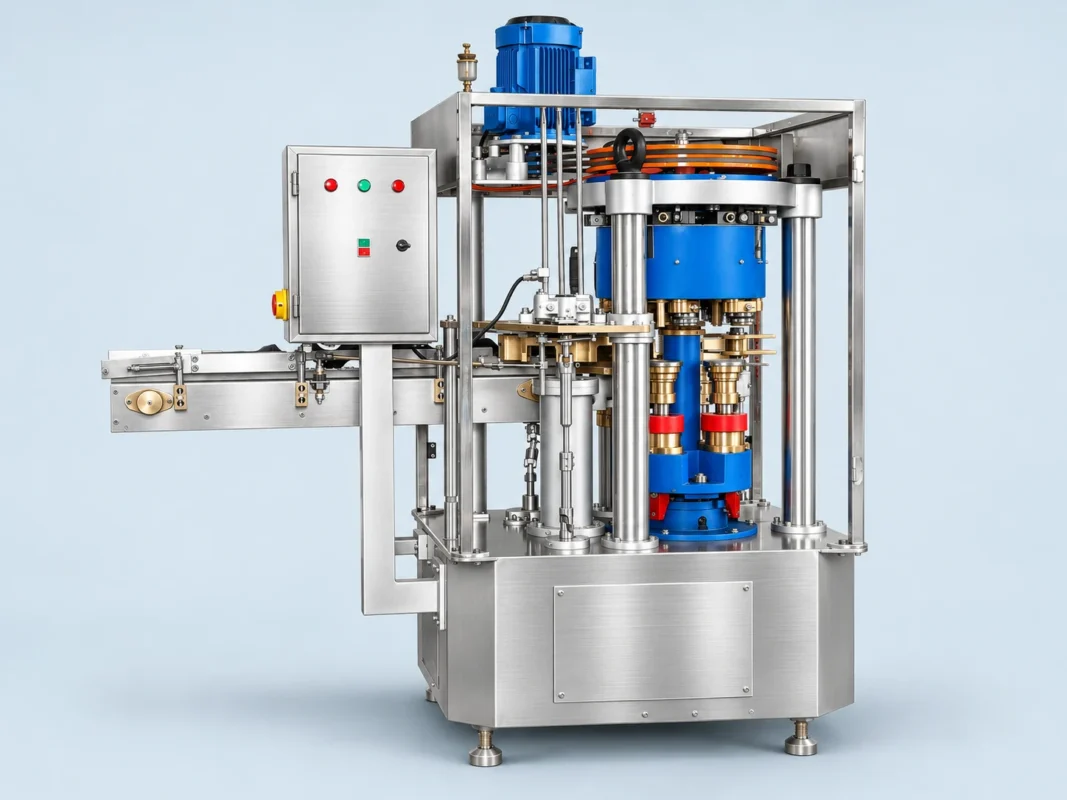
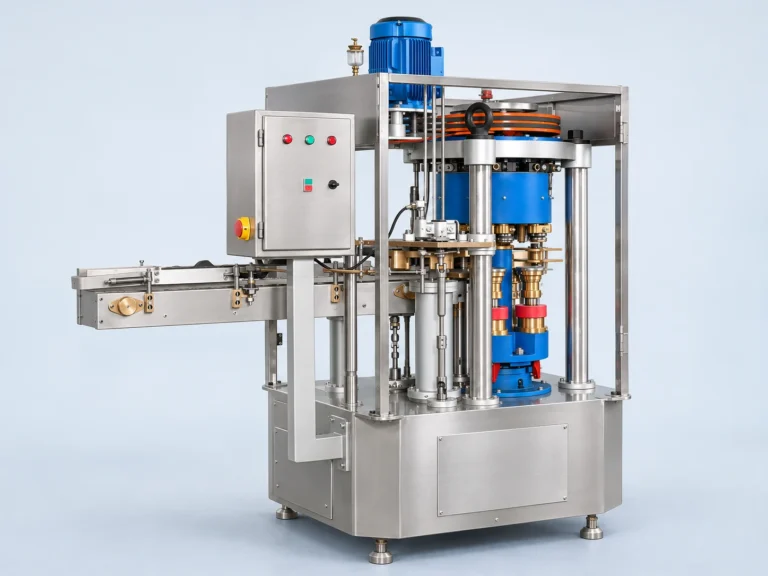
Complete four-head rotary metal can seaming machine with control panel

Four-Head Metal Can Seamer

Automatically sealing metal cans.

The four-head metal can seamer creates the final seal after filling. A uniform, controlled double seam supports the microbial protection and shelf life of the finished product. Its four-head rotary design provides stable operation and integration with industrial packaging lines.

CMS4102 · 100–160 cans/minute

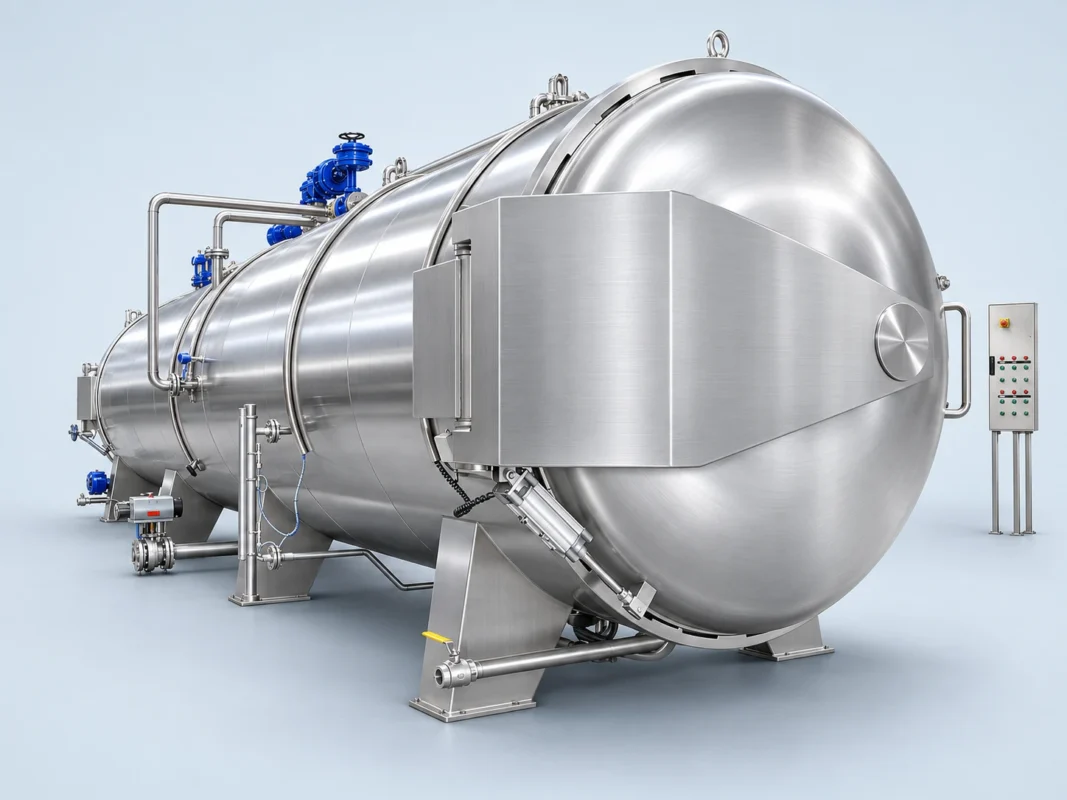
Complete horizontal stainless steel retort autoclave with closed front door

Automatic Retort Autoclave

Final cooking and sterilisation of the packaged product.

The automatic retort carries out sterilisation and final cooking of products packed in metal cans using controlled pressure and temperature. This process supports microbial safety and increases the shelf life of canned foods. PLC controllers manage the entire process.

GM2104

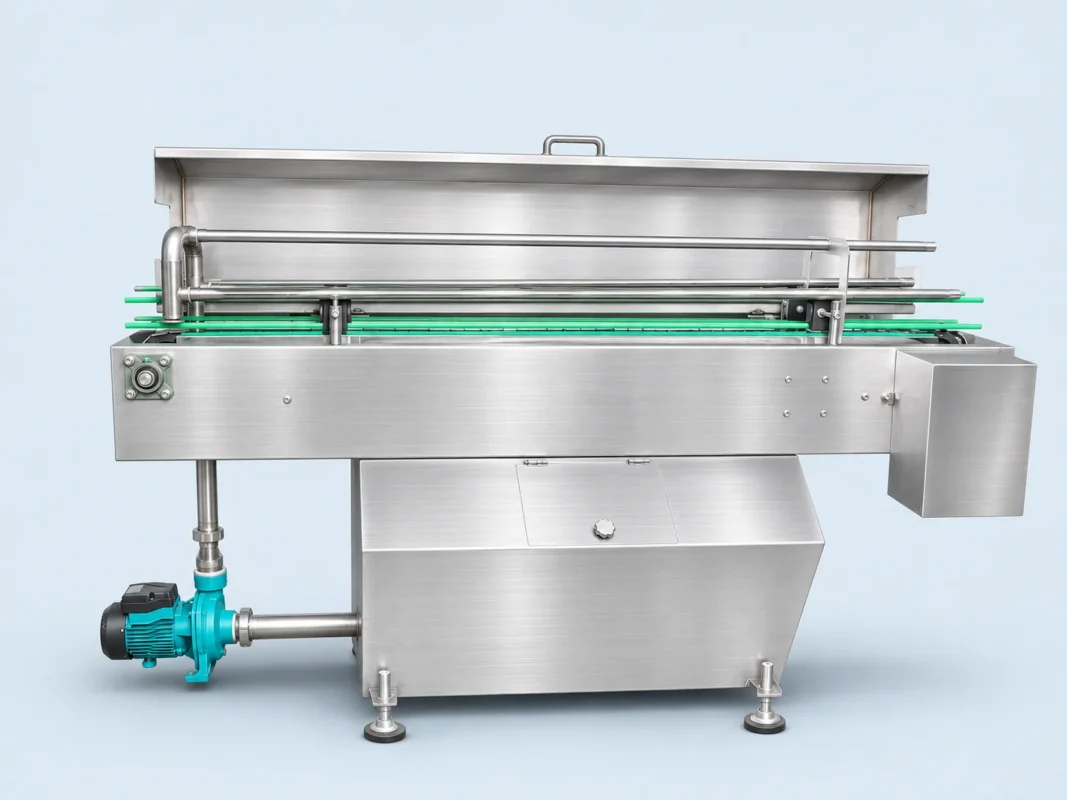
Complete stainless steel can washer with conveyor rails and circulation pump

Can Washer

Washes cans before further handling.

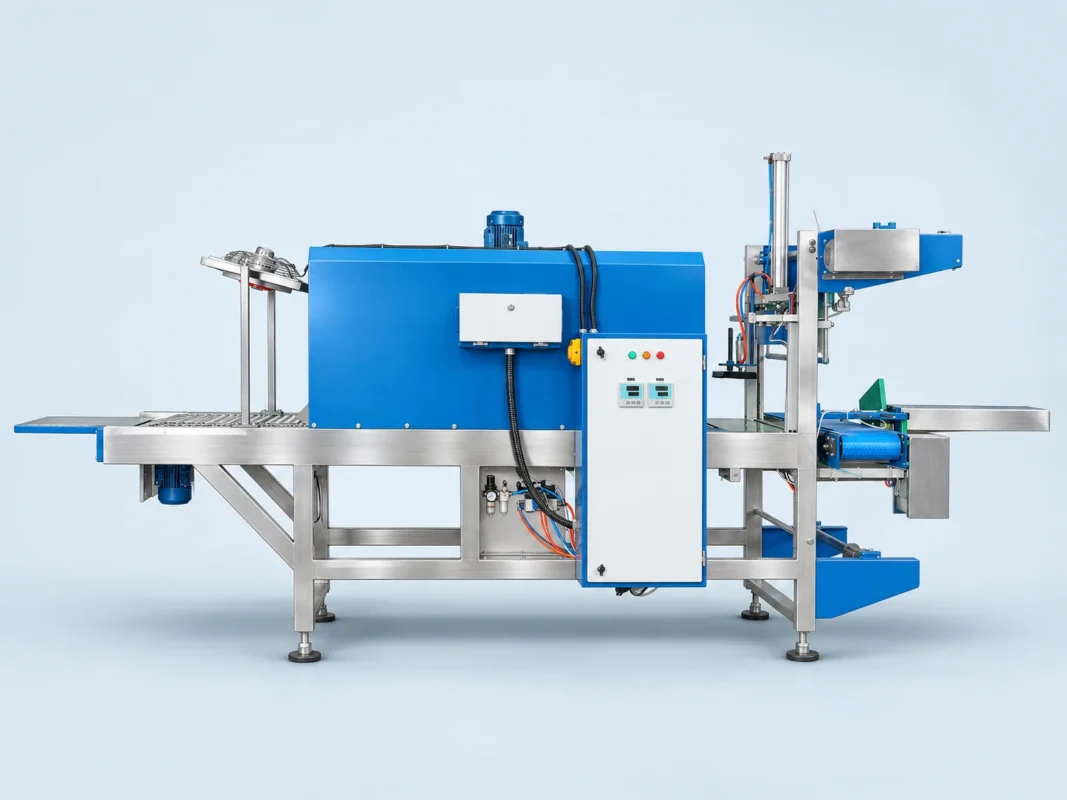
Complete blue and white shrink wrapping machine with conveyor

Shrink Wrapping Machine

Wraps grouped containers in shrink film.

Six main machines are described in the supplied tuna-line text. The two additional auxiliary machines shown here follow the supplied image folders.

Explore Liniea projects

View projects

ENGINEERED FOR YOUR PROCESS

How Liniea builds your canned tuna machinery

Liniea Industrial Group manufactures canned tuna production lines and other canned-food production lines. It provides complete services tailored to each production facility: line design and manufacture, supply of main and auxiliary machinery, installation and commissioning, operational testing, operator training and production-line performance optimisation.

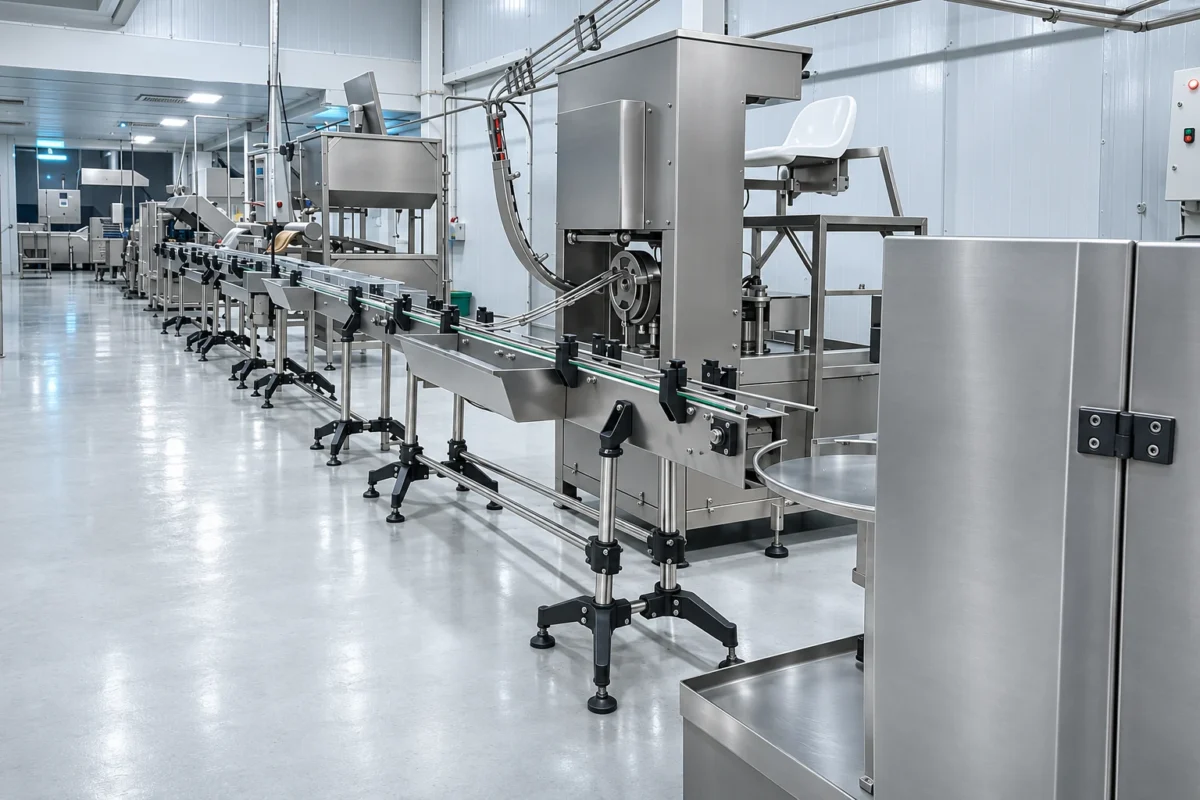
Stainless steel tuna canning equipment and conveyors installed in a production hall

From process requirements to a coordinated equipment package.

01

Process specification

Define the target capacity, product range, packaging format and level of automation, including fish preparation, precooking and the sterilisation thermal profile.

02

Equipment engineering

Coordinate fish receiving and preparation, precooking, cleaning, tuna filling, oil or brine dosing, seaming, sterilisation, cooling and packaging as an integrated system.

03

Fabrication & assembly

Manufacture the machinery to suit the agreed production process and factory infrastructure.

04

Trial production & optimisation

Support trial production and optimise the performance of the complete production line.

How Liniea helps set up your canned tuna factory

One coordinated route from site planning to commissioning.

Feasibility

Define daily output, the product portfolio, investment budget, packaging and automation level.

Factory layout

Plan fish preparation, cooking, filling, retort processing, cooling and packaging, together with cold storage, quarantine, material and waste stores, laboratories, utilities and staff areas.

Utilities

Plan electricity, water, and gas or diesel fuel according to the selected equipment and site conditions.

Installation

Coordinate installation and commissioning of the production line and its auxiliary equipment.

Commissioning

Carry out operational tests, train operators and optimise the performance of the complete line.

The project scope is tailored to your site, product and production requirements.

Canned tuna line: your questions answered

What determines the cost of setting up a canned tuna production line?

The investment depends on a combination of technical and implementation factors and cannot be reduced to one fixed figure. Target production capacity, the level of automation, the selected cooking and sterilisation processes, and the chosen packaging format are among the main cost drivers. The degree of equipment integration also directly affects the final cost.

Each production line must therefore be designed around the actual conditions of the production facility. Liniea focuses on selecting equipment that is both suitable for the project and capable of future expansion.

Space requirements depend on production capacity, equipment arrangement and the level of automation. A canned tuna factory may include a production hall, central warehouse, quarantine area, materials store, waste store, cold storage, administration and staff facilities, microbiological and chemical laboratories, landscaped areas, security facilities and a utility or boiler room.

The production hall includes fish preparation, cooking, filling, retort processing, cooling and packaging areas. The capacity, operating model and automation level determine the number and type of machines. The equipment arrangement and production flow—from raw-material storage to finished-product storage—determine the overall site area and the required buildings and ancillary spaces.

In many projects, a canned tuna line can be engineered to produce similar products. Process changes, equipment adjustments and different raw materials can broaden the product range, reducing dependence on a single product. This flexibility must be considered during engineering design, and Liniea treats it as a competitive advantage for the investor.

Other meat products can be produced only when the relevant operating authorisation has been obtained, the product uses a process compatible with tuna canning, and its manufacture will not damage the machinery. Subject to these conditions, possible products include canned head-and-trotter dishes, chicken, meat, different stews and turkey.

The main differences are process integration, the degree of automatic control and reliance on manual labour. These directly affect capacity, quality consistency and operating costs.

In a fully automatic configuration, precooking, cooling, accurate weight-controlled filling, oil or brine dosing, vacuum-controlled seaming, can washing and transfer to the retort are coordinated continuously through PLC control and central monitoring. This arrangement supports consistent net weight, fewer operator errors, improved food-safety control and higher efficiency at large production capacities.

In a semi-automatic configuration, some tasks—such as fish-meat cleaning, arranging fish in cans or carton packing—are carried out manually. Some process parameters depend on operator skill. This model is more suitable for lower capacities and limited initial investment, while requiring continuous supervision to maintain consistent quality.

Yes, provided that expansion is considered from the start. Capacity can be increased by raising the speed of selected machines, installing parallel equipment or upgrading automation. Liniea’s modular approach allows planned changes to be introduced without prolonged production stoppages, which is valuable for investors anticipating gradual market growth. Expandability reduces the risk of the business being constrained by its original capacity.

Some machines can be expanded through adjustments, others require modifications, and some production stages need additional machines. Liniea plans modular development from initial design through implementation with future line expansion in mind.

€

How much does a canned tuna production line cost?

Target capacity, automation, cooking and sterilisation processes, packaging format and equipment integration determine the investment. Each line is designed around the actual conditions of the production facility.

Liniea focuses on equipment selection that suits the project and allows future expansion; a project-specific quotation follows engineering review.

EquipmentInstallationUtilities
Discuss your project budget

Canned tuna production insights

Canned Tuna Factory Space and Infrastructure Planning

A factory floor plan should follow the product from receiving to dispatch. The production-line footprint is only one part of the site: [...]

Read article
Semi-Automatic vs Fully Automatic Canned Tuna Lines

Automation changes how the stages of tuna canning are coordinated. Choosing a suitable system requires a realistic view of product demand, staffing, [...]

Read article
What Else Can a Canned Tuna Production Line Make?

Product flexibility can improve the use of a factory, but it has to be designed into the process. A tuna canning line [...]

Read article
Explore all 12 planning guides

READY TO START YOUR PRODUCTION PROJECT?

Discuss your product, capacity and factory requirements with Liniea.