


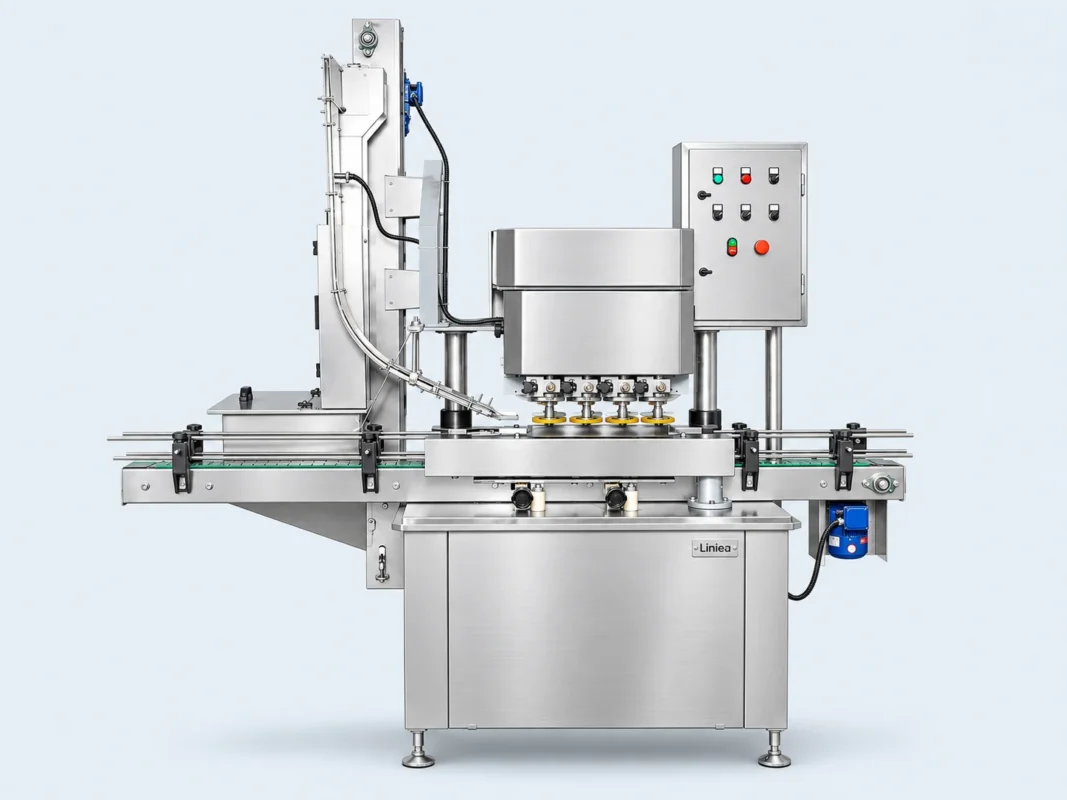
Coordinate olive preparation, covering liquid, package integrity, product-specific treatment and storage conditions.
Treat preservation as product-specific
Shelf life depends on the olive preparation, formulation, covering liquid, package and storage conditions. Whole, pitted, stuffed and seasoned products need an appropriate review of their actual process. A general machinery description cannot establish one storage period for every product. Base the claim on evidence for the finished product and packaging combination.
Control consistency through packaging
Grading and preparation support repeatable product presentation. Coordinate the solid olive fill with covering-liquid dosing and the selected closure. Containers should reach closing in a controlled condition, and subsequent handling should preserve package integrity. Record checks and investigate deviations rather than assuming the nominal capper speed demonstrates package quality.
Match treatment to the product
The supplied tunnel description specifies controlled, uniform heat through three thermal phases after closing. It does not provide a universal treatment schedule. The Codex Standard for Table Olives recognises different preparations and preservation methods. Establish the appropriate process for the formulation and container with qualified technical review.
Protect the product after processing
Cooling, handling, storage and distribution should maintain the validated conditions and package integrity. Keep batch identification linked to production and inspection records. Changes in ingredients, fill, package or treatment can require reassessment. Liniea can coordinate equipment and control requirements; the producer establishes shelf life through suitable validation and quality procedures.
Explore the Liniea table olive production line or discuss your factory requirements.
