


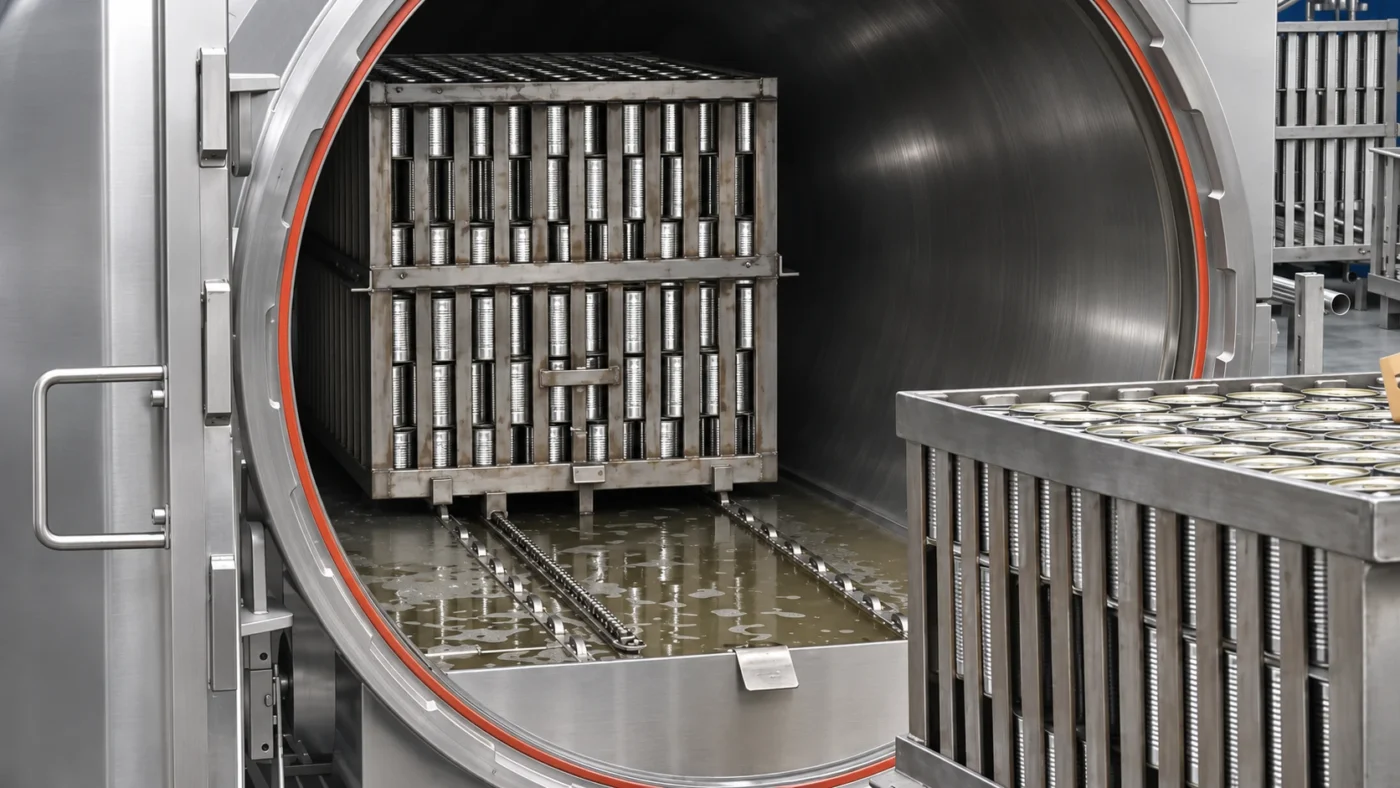
Plan parallel mixers, filling upgrades, additional retorts, thermal records and future packaging formats from the start.
Make growth part of the engineering brief
Modular design allows a wet pet food factory to expand in stages. The supplied Liniea documentation identifies parallel mixers, filler upgrades and additional retorts as capacity options. Expansion is easier when space, utilities, control interfaces and handling routes have been considered before the first installation.
Identify the production constraint
Measure output through preparation, mixing, precooking, filling, seaming, retort treatment, cooling and final packing. Include cleaning, changeovers and retort loading in the assessment. The limiting stage can change with the recipe and container. A faster filler may create queues when the retort or mixing system cannot accept the increased flow.
Prepare controls and records for development
Controls can be upgraded to digital monitoring, thermal-data recording and connection to manufacturing execution systems (MES). Define the production information required, how it will be reviewed and which equipment must exchange signals. Confirm the capacity of power, steam, water, compressed air and drainage before adding machinery.
Introduce packaging changes deliberately
High-speed final-packaging equipment or new packaging formats can be added later when their interfaces have been planned. Different containers may require different filling, closing, handling and thermal validation. Stage installation and commissioning around production needs, with defined testing and training responsibilities. Modular engineering can avoid a complete factory redesign, but the required shutdown and operating changes still need a realistic project plan.
Explore the Liniea canned pet food production line or discuss your factory requirements.
