


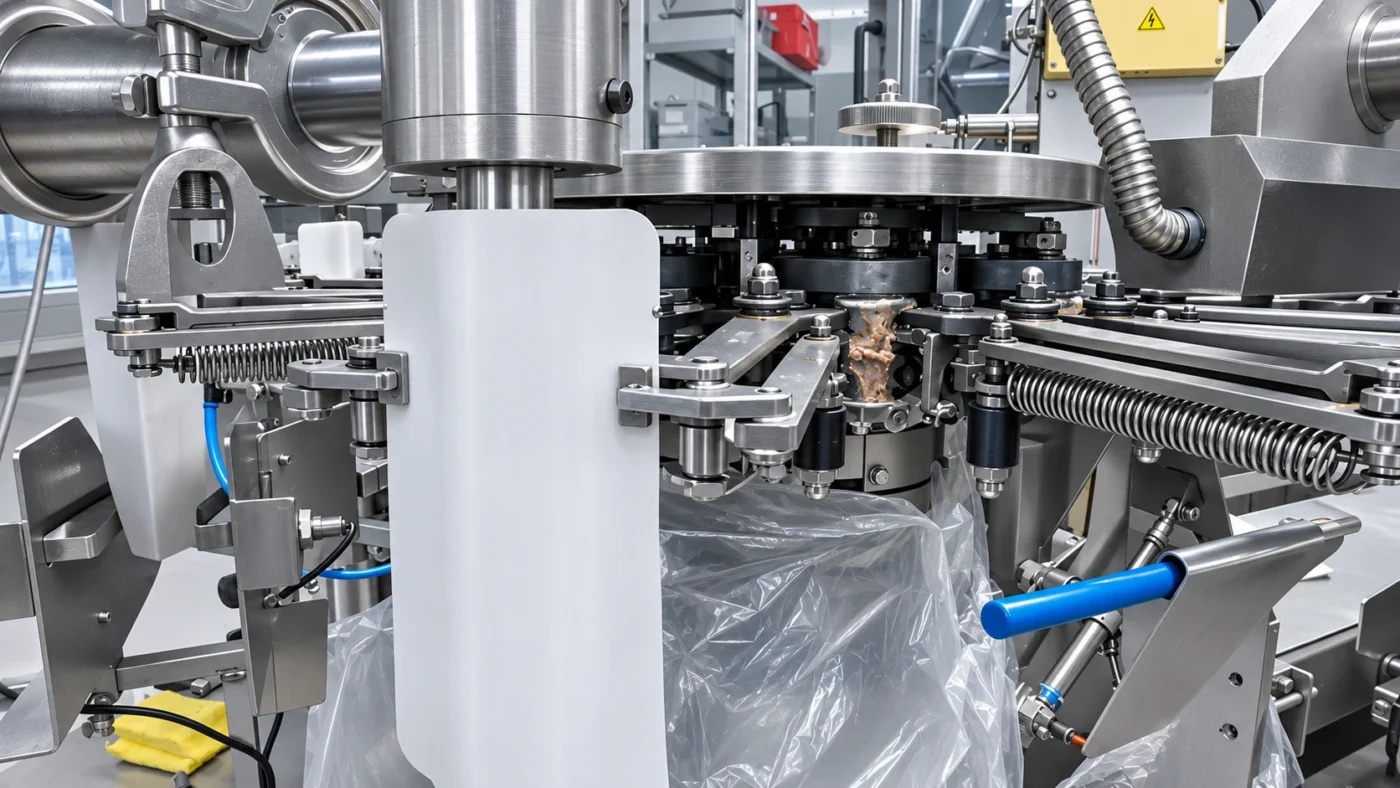
Compare manual handling, integrated controls, production records and factory output when selecting automation.
Describe automation stage by stage
In a semi-automatic line, operators may feed ingredients into the mixer, transfer product to the filler or carry out final packing. The initial equipment investment can be lower, while staffing and supervision become more important. Define the actual responsibilities at each stage instead of relying on a broad semi-automatic label.
Coordinate the continuous and batch operations
A fully automatic configuration integrates programmable mixing, filling, can seaming and transfer to retort processing. Filling is a continuous operation, while retort handling may involve batches, so product flow and intermediate handling must be coordinated. Increasing the speed of one machine does not establish the output of the complete factory.
Specify the control and recording requirements
The source brief describes recording critical parameters such as product core temperature and sterilisation time. Suitable integrated controls support texture consistency, microbial-safety management and reduced cross-contamination risk. The producer still needs validated processes, competent operators and an effective quality system. Automatic operation does not replace product-specific verification or maintenance.
Choose an appropriate development route
Review expected sales, product variety, cleaning requirements, labour availability and the expansion plan. The supplied workforce reference is 3–8 people depending on automation; confirm the exact operating scope before using it as a staffing model. A phased project can automate important handling or control duties first, then expand later. Liniea can align the selected automation with the agreed capacity, quality requirements and investment strategy.
Explore the Liniea canned pet food production line or discuss your factory requirements.
