


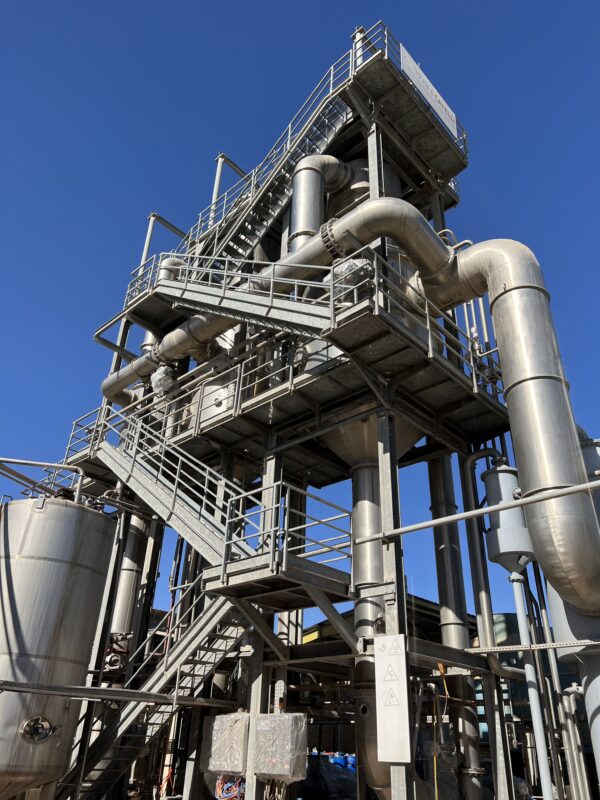
The choice between a semi-automatic and fully automatic tomato paste production line should be made stage by stage. These labels describe different levels of operator involvement, but they are not standard equipment specifications. Two suppliers can use the same label for substantially different control systems.
Start with the operating tasks: receiving, inspection, transfer, process adjustment, cleaning, packaging and record keeping. For each task, identify what the operator does, what the control system does and what happens if a measurement or utility fails.
Define automation by function
A semi-automatic arrangement may use powered machines with operators starting sequences, adjusting setpoints and moving materials between stages. A more automated arrangement may coordinate transfers, control defined process variables, record operating data and manage interlocks. Neither description proves performance without a detailed functional specification.
Ask for a written sequence of operation, alarm list and operator responsibility matrix. Specify which recipes and settings can be changed, who can change them and how changes are recorded. Include start-up, normal production, cleaning and shutdown rather than focusing only on steady running.
Compare the operational trade-offs
- Staffing: estimate tasks and shift coverage, not just a promised headcount reduction.
- Consistency: identify which variables are measured and controlled and how instruments are calibrated.
- Traceability: define batch records, event logs and exportable production reports.
- Maintenance: assess local electrical, mechanical and controls support.
- Flexibility: check recipe changes, product changeovers and safe manual recovery procedures.
- Investment: compare the complete controls scope, commissioning and training requirements.
Automation does not remove the need for trained operators or quality supervision. A plant still needs decisions about incoming fruit, product release, maintenance and deviations. The useful question is whether automation makes those responsibilities clearer and more dependable.
Concentration control is one practical example
Vaisala describes in-line refractometry as a way to provide continuous concentration information during tomato paste evaporation. This illustrates the difference between a broad “automatic” label and a defined control function. For a proposed line, ask how concentration is measured, checked against laboratory results and used by the control system.
Do not assume that a sensor alone delivers the desired result. Instrument location, product conditions, calibration, control logic and operator response all need to work together. Agree the acceptance test using representative production conditions.
Automation must support the safety system
The FDA's aseptic inspection guidance discusses both manual and computer-controlled systems and the importance of checking controls and records. Its specific regulatory scope should not be generalized to every tomato product, but the operational lesson is useful: automatic controls also require verification.
Any critical process limits and responses must come from the validated process and applicable requirements. Operators should not bypass protective controls to maintain output. Training should cover alarms, abnormal conditions and safe recovery, not simply how to press Start.
Choose an upgrade path that matches the team
A staged approach can be sensible when an existing plant has reliable equipment but weak measurement or record keeping. Prioritise a measurable problem, such as unstable transfer or missing production data, and specify the desired result. Ensure later upgrades can integrate with the selected controls and documentation.
Is full automation always the better investment?
No. The right scope depends on throughput, operating complexity, workforce skills, service availability and the cost of the problems being solved.
Can a semi-automatic line be upgraded later?
Often some functions can, but compatibility must be checked. Motors, valves, instrumentation, panels and software interfaces may all affect the upgrade scope.
Plan your tomato processing project
Explore the Liniea tomato paste production line for the process stages and equipment overview. Share your raw-material supply, product specification, packaging format and site constraints when requesting a project-specific proposal.
