


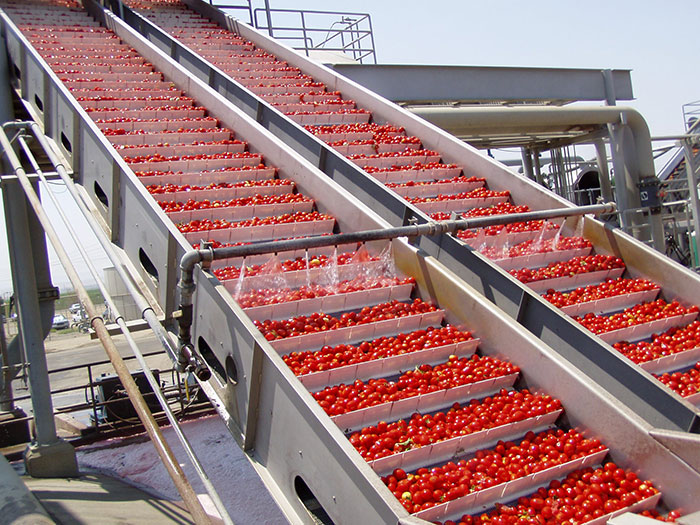
A tomato paste production line may provide a starting point for several tomato-based products, but it is not automatically a universal food-processing line. Receiving, washing, preparation and some transfer equipment can be shared in a suitable design. The finished product still determines the necessary process, formulation, treatment and packaging.
Evaluate every additional product as a separate project specification. “Uses tomatoes” is not enough to establish compatibility. Texture, particle size, viscosity, ingredients, preservation method and pack format can all change the equipment requirement.
Tomato purée and products at different concentrations
A proposed range of tomato concentrates should be assessed against the operating envelope of the refining and concentration systems. Specify the target soluble solids, consistency and quality criteria for each product. Confirm that pumps, controls and downstream handling remain suitable across that range.
The CXS 57 standard distinguishes tomato purée from tomato paste by natural total soluble solids: purée is at least 7% but below 24%, while paste is at least 24%. This classification does not by itself establish an equipment recipe or authorize a label in every market; destination requirements still need checking.
Sauces and ketchup require a formulation process
Making a formulated sauce generally adds ingredient dosing, mixing and a defined recipe. Products containing oil, spices, sugar or particulates may need different mixing, heating and filling arrangements. Ask whether ingredients are incorporated as powders, liquids or solids and how their addition will be controlled and recorded.
Consider cleaning and allergen management when recipes change. A line previously used only for tomatoes may need a different changeover procedure once other ingredients are introduced. Any new product must have an appropriate validated preservation process and packaging specification.
Tomato juice is a separate product brief
Do not assume that bypassing an evaporator produces a market-ready juice. The recipe, consistency, separation behaviour, treatment and filling system need to be defined. Product trials should establish the required sensory and physical characteristics, and the selected packaging must suit the intended storage and distribution conditions.
The same logic applies when considering products from other fruits or vegetables. Differences in seeds, fibres, skins and acidity can change preparation and finishing requirements. Equipment suitability should be confirmed with representative raw material rather than a generic sales description.
Some products need a fundamentally different route
Whole peeled or diced tomatoes are not produced by crushing, refining and concentrating fruit into paste. Preserving pieces requires suitable preparation and handling equipment and a process designed around those pieces. Existing receiving equipment may still be useful, but the shared sections should be identified explicitly.
Create a compatibility matrix with products as rows and process stages as columns. Mark each stage as shared, modified, additional or unsuitable. Add the required cleaning changeover and packaging changes alongside it. This turns a vague diversification idea into a scope that can be costed and tested.
Prove the second product before investing
- Agree the product specification with a prospective buyer.
- Test the recipe and raw material at an appropriate trial scale.
- Confirm equipment compatibility and cleaning requirements.
- Validate preservation and packaging for the intended market.
- Calculate changeover time, campaign scheduling and incremental cost.
Can diversification extend the operating season?
It may, if raw-material availability, customer demand and equipment suitability align. Additional products should not be included in revenue forecasts before their technical and commercial feasibility is established.
Does shared equipment eliminate new investment?
No. Mixing, dosing, treatment, filling and cleaning modifications can remain necessary even when the front end is reused.
Plan your tomato processing project
Explore the Liniea tomato paste production line for the process stages and equipment overview. Share your raw-material supply, product specification, packaging format and site constraints when requesting a project-specific proposal.
