


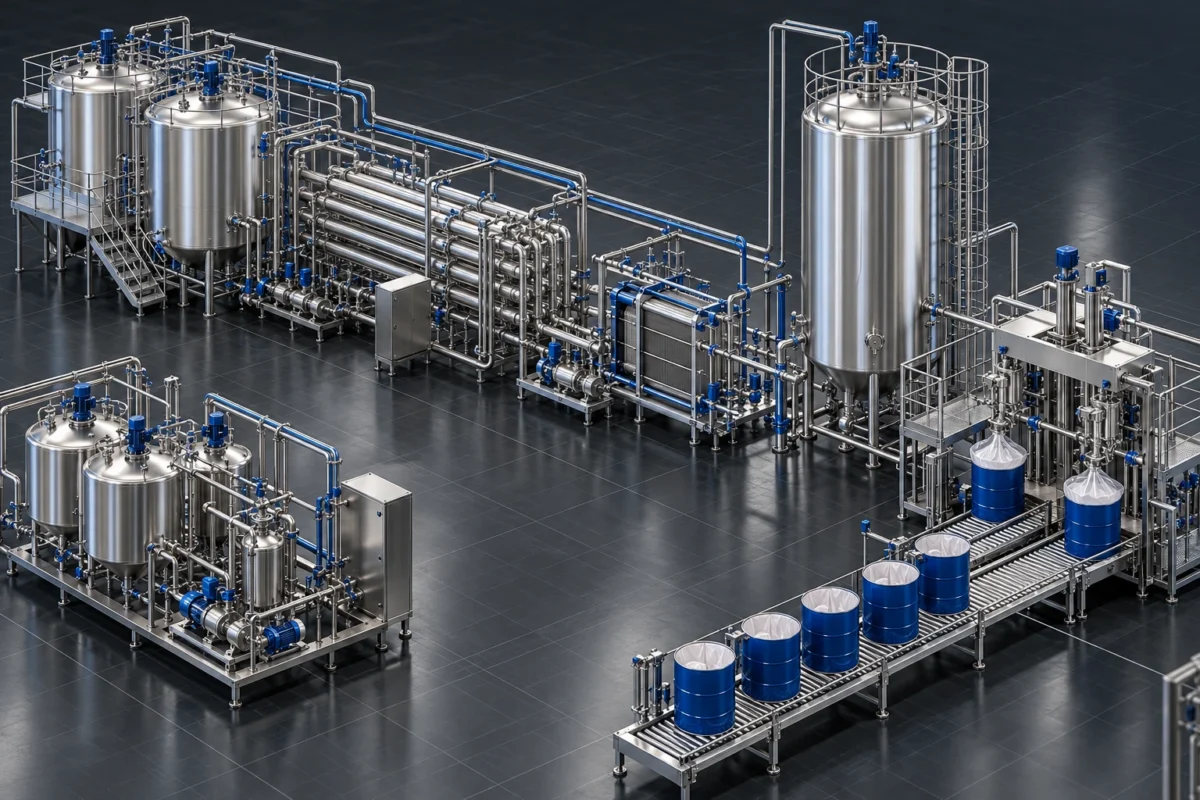
Map the path of empty drums, supported bags and filled drums before choosing conveyors or lifting equipment. Consider operator reach, safe access and the available floor area. Agree the packaging specification and handling method alongside the filler layout, rather than treating dispatch as a later addition.
Specify the operating requirement
Define bulk bag format, drum handling and aseptic filling duty and describe compatible aseptic bags supported by drums. Include the available working hours, expected changes between products and how materials reach the packing area. These details make the discussion more useful than a daily production target alone.
Review interfaces between stages
Map paste treatment, controlled transfer and bag-in-drum filling and identify where material waits between operations. Consider the coordinated treatment, buffer and filling capacity, transfer arrangements and operator access. Review how stoppages and batch changes affect the equipment before and after the selected stage.
Include utilities and cleaning
The service review should cover treatment-system services, sterile-process requirements, cooling and cleaning utilities. Discuss product-contact cleaning, access for inspection and the procedure for changing between recipes or pack sizes. Final operating and product-processing parameters must be established for the agreed application.
Turn the review into an equipment brief
Prepare the product and container specifications, the site drawing and the planned production sequence. Request a coordinated proposal that records equipment interfaces, supplied change parts and responsibilities for installation and commissioning. Confirm project-specific values before treating them as performance commitments.
Discuss your production plan
Liniea can review the intended product, site and equipment scope with your team.
Explore the Tomato Paste Aseptic Packaging production line · Discuss your project
