


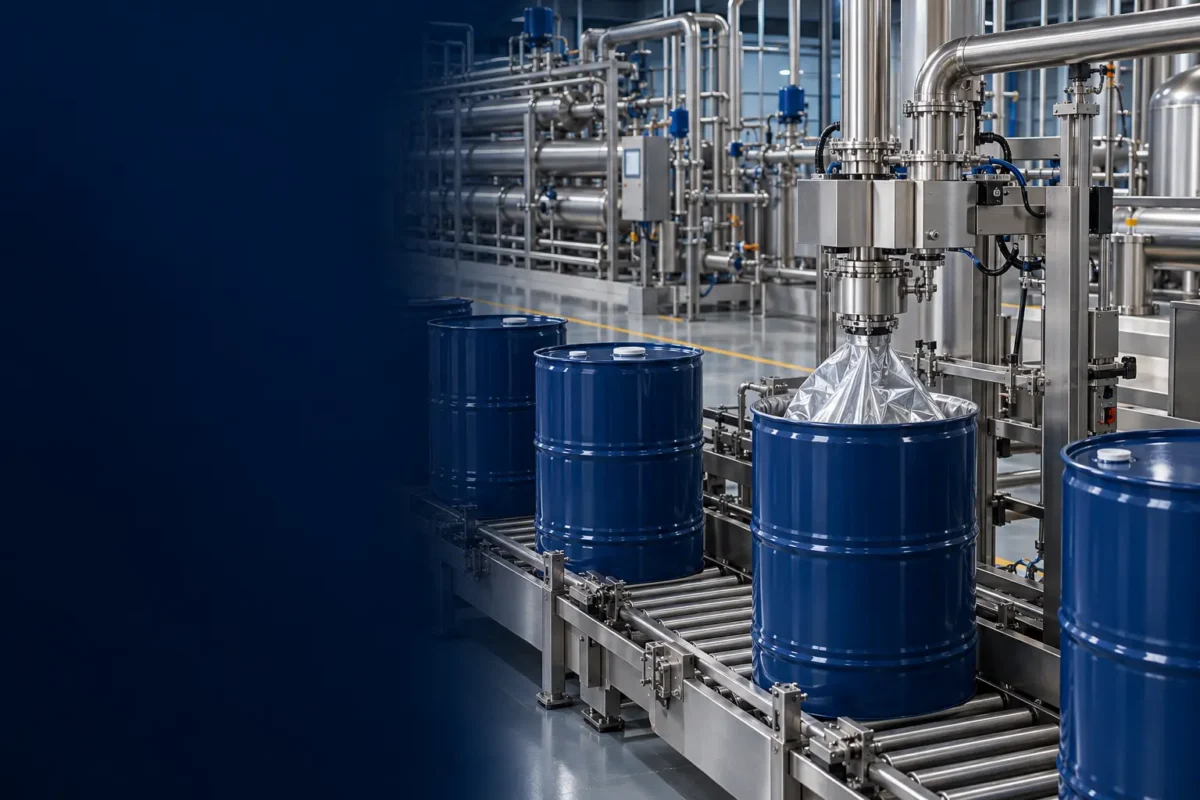
Aseptic packaging depends on the coordinated system and its validated operating procedures. Review the interfaces between product treatment, sterile buffering and the filler. Confirm compatibility with the selected bags and document cleaning, start-up and operating responsibilities with qualified process specialists.
Start with the product
Record bulk bag format, drum handling and aseptic filling duty and the range of products that must run on the equipment. A machine selected for one product may need different components or operating arrangements for another. Describe the required output and the condition of the material entering each stage.
Evaluate the complete process
An aseptic filler must be coordinated with product treatment, sterile transfer, compatible bags and cleaning procedures. Adding a filler alone does not make an existing process aseptic.
Use representative trials
Agree samples, container specifications and the observations that will be used to assess performance. Check handling, cleaning access, adjustment and the connection to adjacent machines. The relevant equipment package includes product treatment, sterile buffering and aseptic filling equipment; a successful individual trial does not replace a review of the complete line.
Compare scope, not just rated speed
Review the operating schedule, changeover requirements and service demand for each proposal. Pay particular attention to the coordinated treatment, buffer and filling capacity. Record any assumptions that need confirmation and distinguish the initial configuration from future options.
Discuss your production plan
Liniea can review the intended product, site and equipment scope with your team.
Explore the Tomato Paste Aseptic Packaging production line · Discuss your project
