


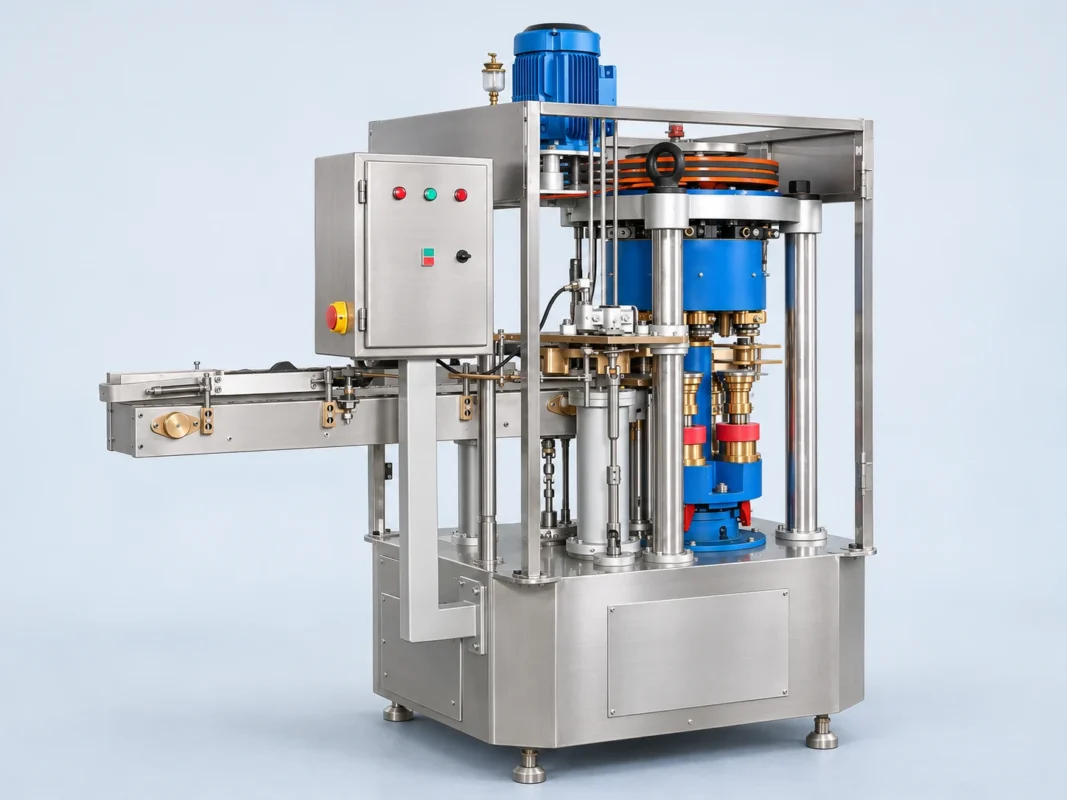
Automation changes how the stages of tuna canning are coordinated. Choosing a suitable system requires a realistic view of product demand, staffing, process control and the investment available for the complete factory.
Project considerations
The main differences are process integration, the degree of automatic control and reliance on manual labour. These directly affect capacity, quality consistency and operating costs.
In a fully automatic configuration, precooking, cooling, accurate weight-controlled filling, oil or brine dosing, vacuum-controlled seaming, can washing and transfer to the retort are coordinated continuously through PLC control and central monitoring. This arrangement supports consistent net weight, fewer operator errors, improved food-safety control and higher efficiency at large production capacities.
In a semi-automatic configuration, some tasks—such as fish-meat cleaning, arranging fish in cans or carton packing—are carried out manually. Some process parameters depend on operator skill. This model is more suitable for lower capacities and limited initial investment, while requiring continuous supervision to maintain consistent quality.
Compare the work of the complete line
A fast filler does not make a factory fully automatic. Review receiving and preparation, cooking, cleaning, can handling, liquid dosing, seaming, can washing, retort loading and final packing. Identify where operators still transfer, inspect or arrange the product and how those activities affect throughput.
Choose controls that support the product
The supplied description identifies PLC control and central monitoring in a fully automatic arrangement. A useful controls specification defines recipe settings, operator permissions, alarms and the production information that needs to be recorded. It should also explain how the line responds when an upstream or downstream stage stops.
Budget for the people as well as the machines
Operator training, cleaning and preventive maintenance remain necessary at every automation level. Compare staffing by task and shift rather than assuming that every manual activity disappears. A phased investment may be appropriate when demand is still developing, provided that interfaces for future automation are considered at the start.
Planning checklist
- Manual tasks by production stage
- Line integration and control boundaries
- Training and maintenance needs
- Expected changeovers and product range
- Future automation and expansion interfaces
Plan your canned tuna line with Liniea
Review the canned tuna production line and discuss your product, site and production requirements with Liniea.
